Take Off
Interdisciplinary Project
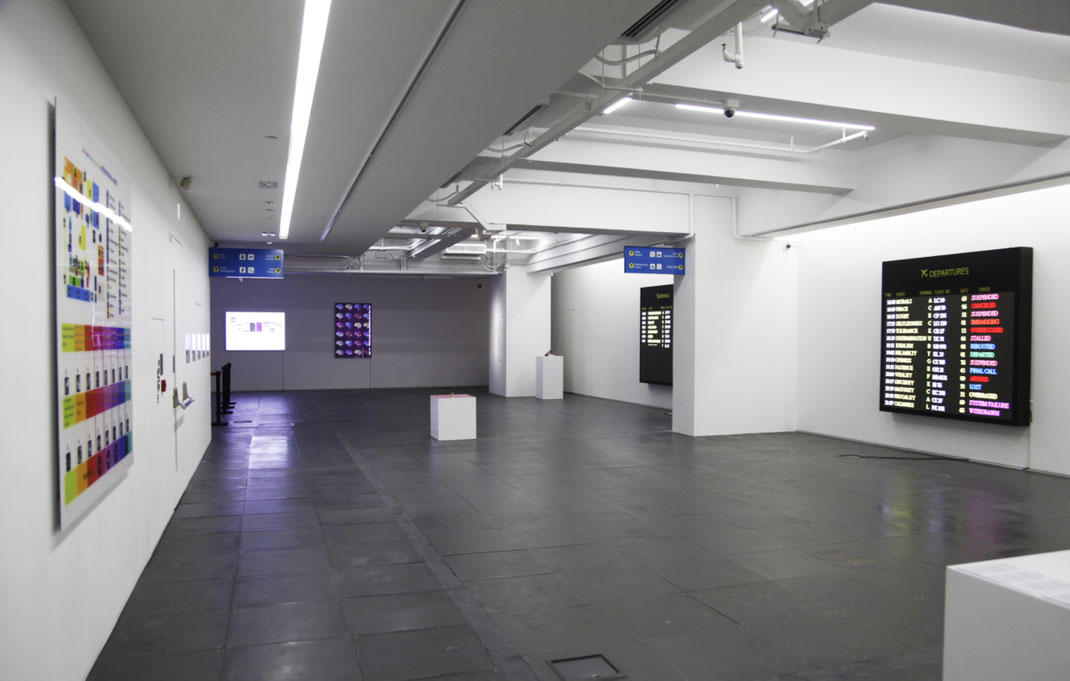
Take Off: When the Airport Becomes a Metaphor for Our Time
Lin’s Take Off (2017) uses the airport as a borrowed shell to examine an increasingly pervasive contemporary condition: we are constantly in motion, yet uncertain where we are heading; we enjoy unprecedented forms of connectivity, yet find it increasingly difficult to determine who we are; we are cared for, managed, and optimized by countless systems, while gradually losing our sense of existence as independent individuals within them.
In Take Off, Lin transforms the exhibition space into a fictional international airport. Upon entering the exhibition, visitors cease to be conventional spectators and instead become travelers, passengers, subjects of administration, and objects of identification. Airport signage, customs procedures, promotional campaigns, welcome videos, mobile applications, information screens, and various bureaucratic interfaces come together to construct a reality that feels both deeply familiar and subtly distorted.
This distortion does not emerge from a futuristic fantasy. It emerges from reality itself.
《Take Off》:当机场成为时代的隐喻
林的《Take Off》(2017)机场作为借来的外壳,讨论越来越普遍的当代处境:我们不断移动,却不知道自己正在前往哪里;我们拥有前所未有的连接,却越来越难确认自己是谁;我们被无数系统照顾、管理、优化,同时也在这些系统之中逐渐失去作为独立个体的存在感。
在《Take Off》中,林将整个展览空间转化为一个虚构的大型国际机场。观者进入展厅后,不再是传统意义上的观看者,而成为旅客、乘客、被管理者和被识别者。机场里的标识系统、海关程序、广告宣传、欢迎录像、手机应用程序、信息屏幕等元素共同构成一个高度熟悉却又隐约失真的现实。 这种失真并非来自未来幻想,而恰恰来自现实本身。

Non-Place: The Spiritual Habitat of Contemporary Humanity
The conceptual foundation of the project derives from French anthropologist Marc Augé’s notion of the “Non-Place.”
Airports, highways, shopping malls, hotels, and waiting lounges differ fundamentally from what Augé describes as “places.” They do not carry history, foster belonging, or generate meaningful human relationships. Within them, individuals are reduced to numbers, tickets, documents, and data.
Through Take Off, Lin suggests that while airports were once merely a particular type of modern space, today the entire world is becoming increasingly airport-like.
More and more people inhabit various forms of non-place.
Social media is a non-place.
Algorithmic platforms are non-places.
Data infrastructures are non-places.
Cloud-based identities are non-places.
We constantly log in, switch accounts, upload, synchronize, and verify ourselves, yet struggle to establish a stable sense of identity.
At its core, Take Off investigates how contemporary individuals survive within an ever-expanding world of non-places.
非场所:现代人的精神栖息地
项目的理论基础来自法国人类学家 Marc Augé 提出的“非场所(Non-Place)”概念。
机场、高速公路、购物中心、酒店、候机厅等空间,与传统意义上的“地方(Place)”不同。它们不承载历史,不形成归属,不产生真正的人际关系。人在其中只是一个编号、一张机票、一份证件、一组数据。
林的"脱轨“(Take Off) 指出 机场曾经只是现代社会中的一种特殊空间,而今天,整个世界正在机场化。
越来越多的人生活在各种“非场所”之中。
社交媒体是非场所。
算法平台是非场所。
数据系统是非场所。
云端身份是非场所。
我们不断登录、切换、上传、同步、验证,却难以建立稳定的身份认同。
《Take Off》讨论现代人如何在一个不断扩张的非场所世界中生存。

Your Path is Confusing Doesn't Mean You are Lost
Giclee print 170 x 160cm 2017
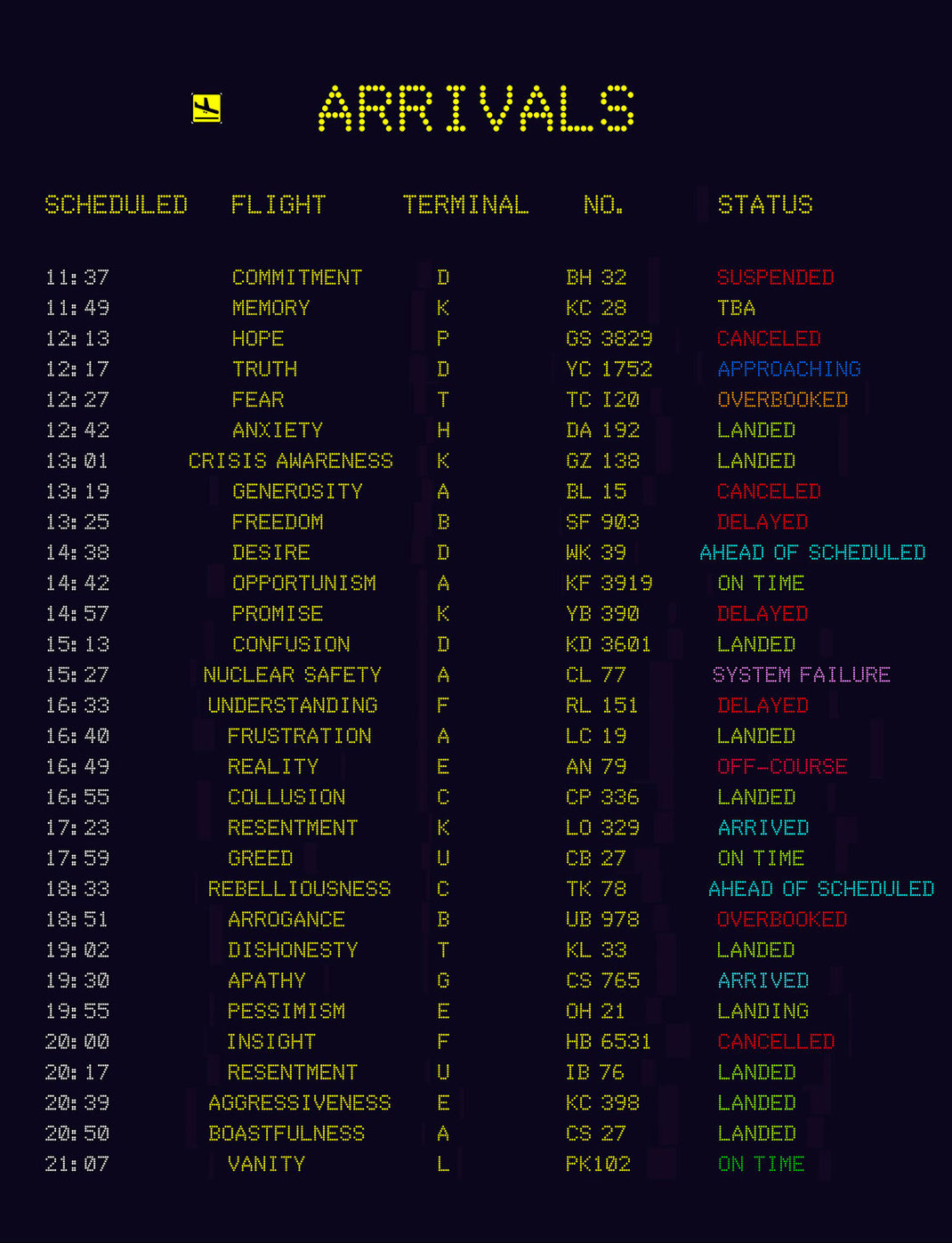
We are Free to Choose but We Are not Free From the Consequences of Our Choices: Arrivals
200 x 250cm LED display panel 2017
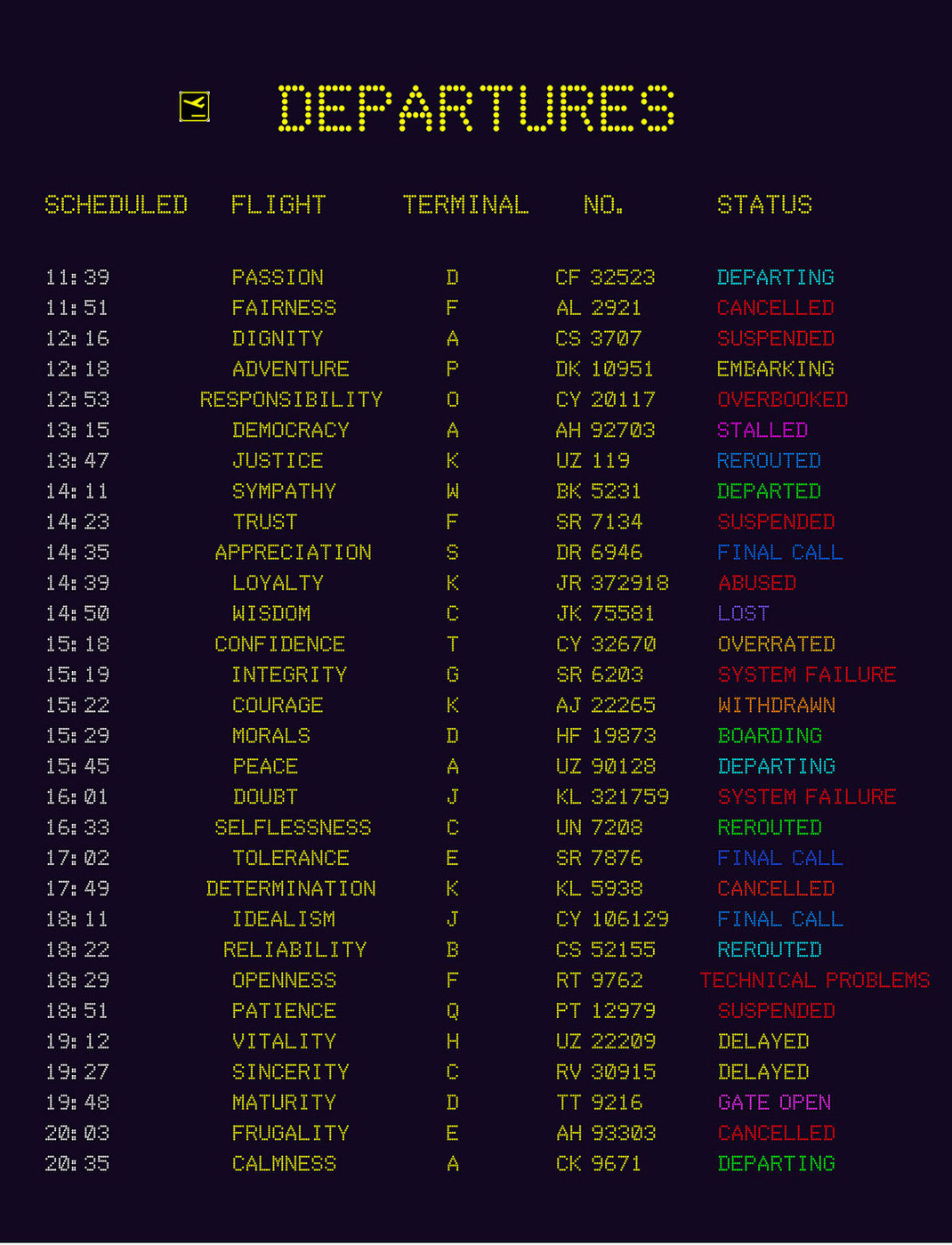
We are Free to Choose but We Are not Free From the Consequences of Our Choices: Departures
200 x 250cm LED display panel 2017
From Spatial Politics to Identity Politics
The most significant aspect of the exhibition is not the airport imagery itself, but the structures of power embedded within these symbols.
One example is the fictional application Superzoom.
Presented as an efficiency-enhancing service, it promises to help travelers move more quickly through customs and security checkpoints. The price, however, is the voluntary surrender of privacy and personal data. Opposing it is another fictional program, Perfect ID, a subversive software capable of disrupting surveillance systems, fabricating identities, and spreading itself through hidden channels.
Together, these works reveal one of the defining contradictions of contemporary society:
the exchange between freedom and convenience.
In technologically mediated societies, control is no longer exercised primarily through force.
It operates through service.
Through efficiency.
Through comfort.
Through effective convenience.
Individuals willingly submit their data, willingly accept monitoring, and willingly become subjects of profiling and prediction.
Power no longer appears as repression; it appears as optimization.
In this sense, Take Off moves beyond conventional political critique and enters a deeper discussion of governance itself.
The future confronting the viewer is not a dystopian nightmare.
It is a future that appears entirely reasonable.
And it is precisely this reasonableness that makes it unsettling.
从空间政治到身份政治
展览中最重要的不是机场符号本身,而是符号背后的权力结构。
例如作品中出现的虚构应用程序“Superzoom”。
它被官方宣传为提升效率的工具,可以帮助旅客更快速通过海关和检查程序。但代价是主动交出自己的隐私与个人数据。与之对应的则是另一个名为“Perfect ID”的破解软件,它能够干扰监控系统、伪造身份信息,并通过隐蔽的方式传播自身。
这一组作品实际上揭示了当代社会最重要的矛盾之一:
自由与便利之间的交换。
在现代技术社会中,控制已经不再通过暴力完成。
它通过服务完成。
通过效率完成。
通过舒适完成。
通过“有效的便利”完成。
个体主动提交数据,主动接受监测,主动被画像和预测。 权力不再表现为压迫,而表现为优化。 这使《Take Off》超越了一般意义上的政治批判,而进入了更深层的治理逻辑讨论。 观众在这里面对的不是一个邪恶的未来,而是一个看起来非常合理的未来。 而正因为它如此合理,才更加令人不安。
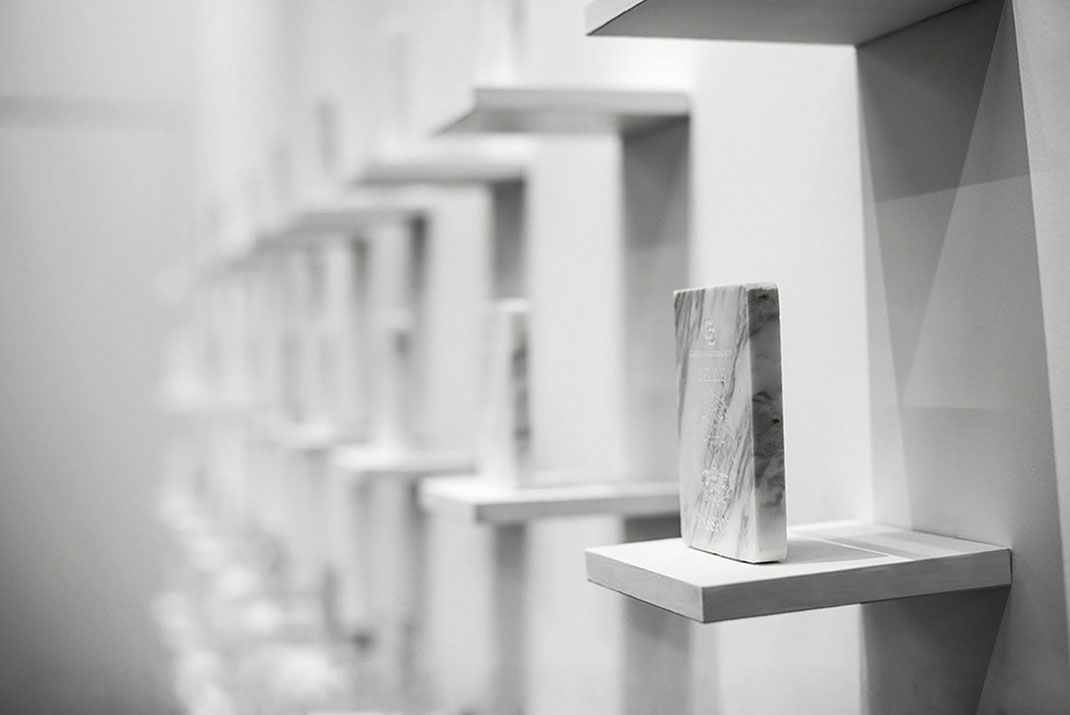
Username or Password Incorrect
Installation 2017
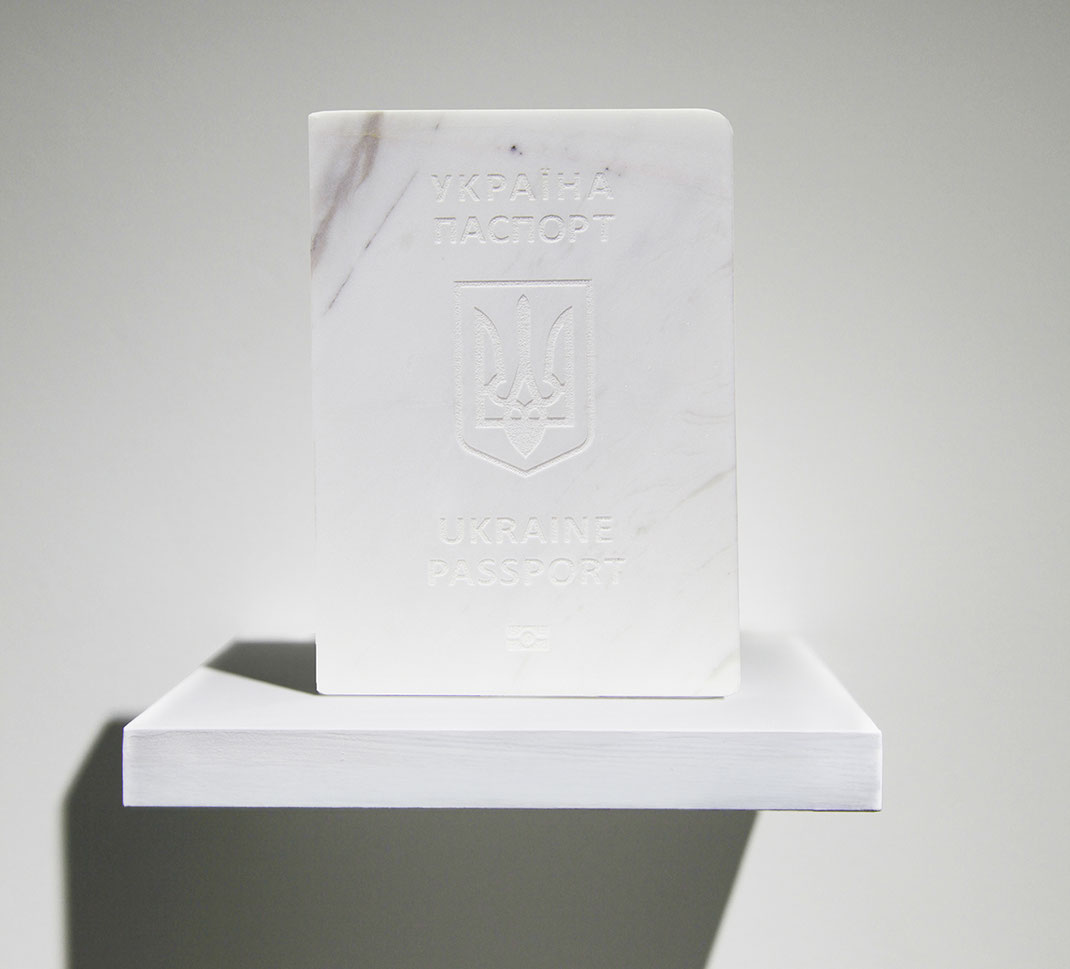
Username or Password Incorrect
Details/ Installation 2017

Collective Anxiety in the Information Age
Throughout the exhibition, electronic information boards continuously display words such as:
“Fear”
“Frustration”
“Commitment”
“Collusion”
These words appear, disappear, and recombine like flight information on an airport departure board.
Unsettling departures.
Unsettling arrivals.
Unsettling explanations.
Unsettling conclusions.
Together they evoke the psychological condition of the information age.
Human beings once struggled with a lack of information.
Today, they struggle with an excess of it.
The question is no longer what we do not know.
Rather, it is whether we still possess the ability to determine what is worth believing.
Under such conditions, anxiety no longer originates from danger itself, but from our inability to locate where danger resides.
Uncertainty becomes a permanent condition of existence.
What Take Off ultimately presents is the collective psychological structure that permeates the age of globalization.
信息时代的集体焦虑
展览中的电子信息板不断滚动显示各种词汇:
“Fear(恐惧)”
“Frustration(挫败)”
“Commitment(承诺)”
“Collusion(共谋)”等。
这些词语像机场中的航班信息一样不断出现、消失、重组。
令人不安的起点。
令人不安的终点。
令人不安的解释。
令人不安的结论。
这些困扰呈现了信息时代的精神状态。 人们曾经面对信息不足。 而今天,人们面对的信息过剩。 问题不再是“我们不知道什么”,而是: 我们已经失去了判断什么值得相信的能力。
在这种背景下,焦虑不再来源于危险本身,而来源于无法确认危险在哪里。 不确定性成为一种永久性的生存状态。
《Take Off》所呈现的,正是这种弥漫于全球化时代的集体心理结构。
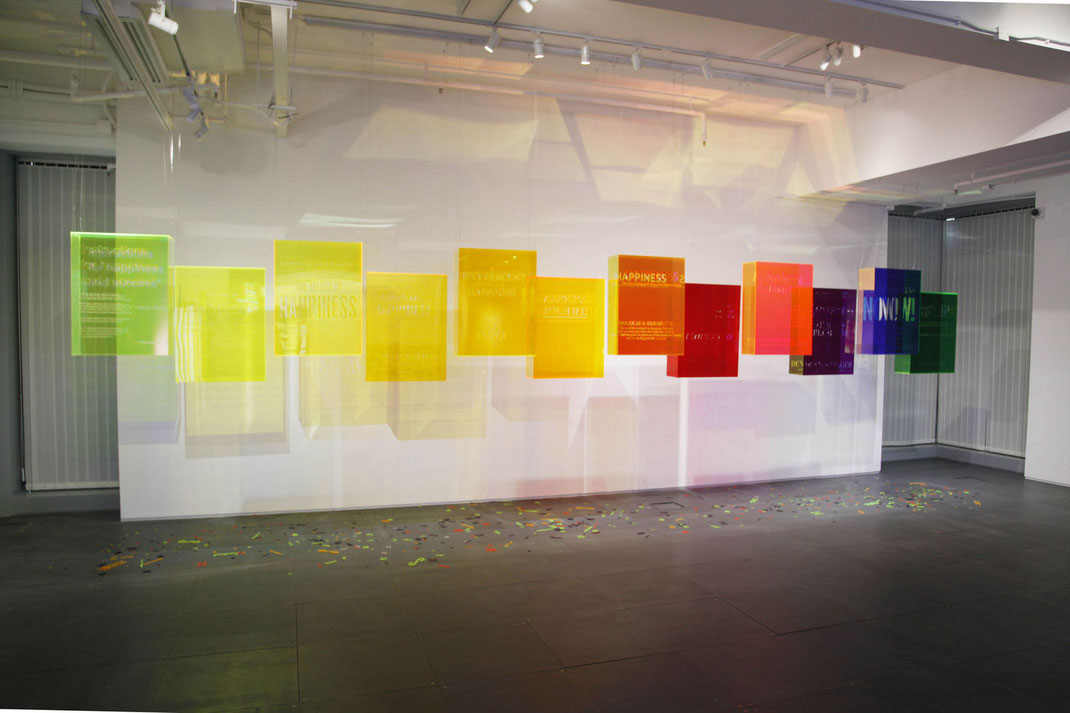
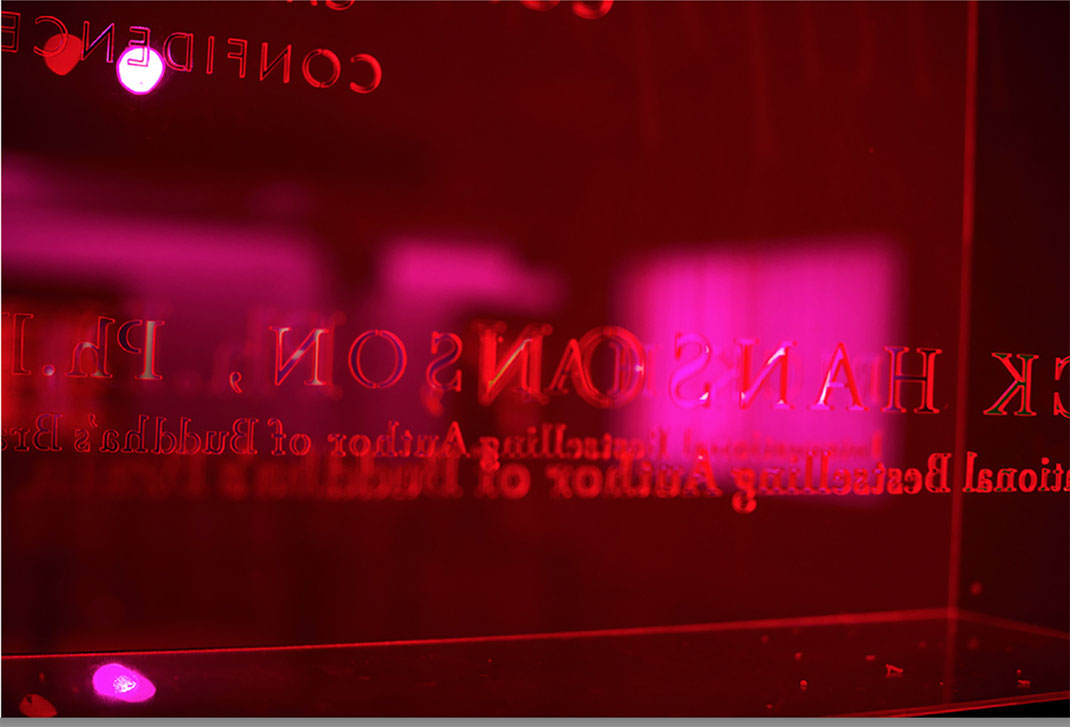
This is Beginning of My Desperation
Installation 2017
Paradox as Method
Paradox has long been central to Lin’s artistic practice.
Take Off may be regarded as one of its most complete manifestations.
The airport symbolizes freedom, yet is saturated with regulation.
Global mobility promises openness, yet produces ambiguity of identity.
Technology increases efficiency, yet diminishes subjectivity.
The more connected we become, the more profound our loneliness appears.
The more security measures are implemented, the greater our sense of insecurity grows.
The entire project is constructed upon contradictions that are simultaneously conflicting and true.
Take Off does not seek to provide answers.
Rather, it functions as a machine for producing awareness.
It encourages viewers to recognize that many realities we take for granted are built upon contradictions that have rarely been adequately examined.
悖论作为方法
林长期以“悖论”作为其核心创作方法。
而《Take Off》可以被视为这一方法最完整的实践之一。
机场象征自由,却充满管制。
全球流动意味着开放,却导致身份模糊。
技术提升效率,却削弱主体性。
连接越发达,孤独越深刻。
安全措施越完善,不安全感反而越强。
整个项目建立在这些彼此冲突却同时成立的逻辑之上。
《Take Off》并不试图给出答案。 它更像是一台制造意识的机器。 它让观众意识到: 许多被视为理所当然的现实,其实建立在一系列从未被真正讨论过的矛盾之上。

Looking Back at Take Off
If Take Off already appeared prophetic in 2017, it seems even more accurate today.
Facial recognition has become commonplace.
Algorithmic recommendation systems increasingly shape the distribution of information.
Digital identities are gradually replacing physical ones.
Artificial intelligence has begun participating in decision-making processes.
Personal data has become a new form of resource.
The real world increasingly resembles the fictional airport envisioned in the project.
For this reason, the most significant social contribution of Take Off may not be its critique of any particular institution or system. Rather, it serves as a reminder that in an age defined by acceleration, optimization, and connectivity, what humanity most urgently needs to protect may not be privacy, freedom, or even efficiency.
It may be the capacity to exist as an independent individual.
Because when everyone has successfully boarded the plane, the most important questions may be:
Where exactly are we flying?
And who still remembers why we departed in the first place?
回看《Take Off》
如果说2017年的《Take Off》具有预言性,那么在今天重新观看,它甚至显得准确。
人脸识别已经普及。
算法推荐已经主导信息分发。
数字身份逐渐替代物理身份。
人工智能开始参与决策。
个人数据成为新的资源。
现实世界越来越像项目中那个虚构的机场。
正因如此,《Take Off》最重要的社会意义或许不在于批判某种具体制度,而在于提醒我们: 在一个不断加速、不断优化、不断连接的时代,人类最需要保护的,也许不是隐私,不是自由,甚至不是效率。 而是作为一个独立个体存在的能力。
因为当所有人都顺利登机的时候,真正值得追问的问题可能是: 我们究竟正在飞向哪里? 以及, 还有谁记得自己为什么出发。

Rejected With Love
Installation 2017


Superzoom
App 2017

This app is a disturbing component of the airport project, a fictional powerful mobile application called "Superzoom," which is highly recommended by the government in the airport's "welcome video." It promises to help individuals pass through customs more quickly, but at the cost of forfeiting personal privacy.
这件APP是该机场项目中令人不安的组成部分,这是一个虚构的强大手机应用程序,名为“Superzoom”,它同时在机场的“欢迎录像”中被政府高度推荐。它承诺帮助个人更快地通过海关,却以放弃个人隐私为代价。
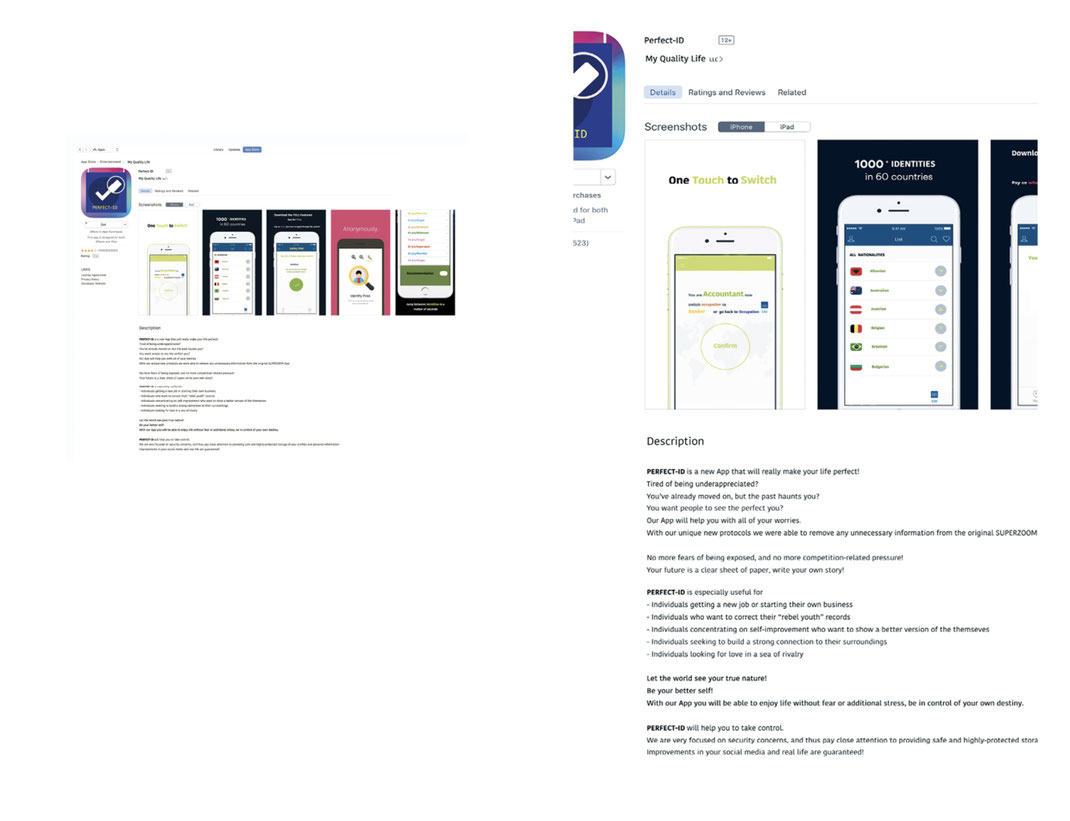
Perfect ID
App 2017
In response to Superzoom there is a more discretely presented advertisement for an app called Perfect ID. Produced by a company called My Quality Life LLC, Perfect ID is a crack for the Superzoom app. It prevents monitoring and forges relevant information to compromise attempts at data gathering. It promises to provide technology that disrupts Superzoom at any time. However, as the app interferes with government attempts to gather information, My Quality Life LLC must not advertise their app explicitly. They are forced to publicize in more subtle ways and this includes sponsoring public service advertising.
Critical Thinking Matters: It's Time to Reinvent, Rethink, Re-strategize, and Grow is one of these public service advertisements. Sponsored by My Quality Life LLC, the advert appears to encourage positive social thinking, yet it is also a veiled criticism of the Superzoom app. Once viewers piece together that the promotional message is linked with Perfect ID, they realize that the system at work is similar to the commercial interests and ideals of our current social reality, where despite clear rules and cultural understandings, there is a long standing series of unspoken rules that govern business and politics.
对于Superzoom的回应是一个更加低调呈现的名为Perfect ID的应用的广告。由My Quality Life LLC公司制作,Perfect ID是针对Superzoom应用的破解工具。它可以阻止监控,并伪造相关信息以破坏数据收集的尝试。它承诺提供随时干扰Superzoom的技术。然而,由于该应用干扰了政府收集信息的尝试,My Quality Life LLC不能直接宣传他们的应用。他们被迫以更加微妙的方式进行宣传,其中包括赞助公益广告。
“Critical Thinking Matters: It's Time to Reinvent, Rethink, Re-strategize, and Grow”是其中一个公益广告。由My Quality Life LLC赞助,该广告似乎鼓励积极的社会思考,但也是对Superzoom应用的隐晦批评。一旦观众将宣传信息与Perfect ID联系起来,他们意识到这个系统与我们当前社会现实的商业利益和理想非常相似,尽管有明确的规则和文化理解,但长期以来存在着一系列不成文的规则来统治商业和政治。

CULTURE / ART REPUBLIK
All Aboard: Chinese artist Lin Jingjing at de Sarthe Gallery, Hong Kong
Chinese artist Lin Jingjing questions the state of contemporary living at de Sarthe Gallery
Sep 17, 2017 | By Art Republik
ACCORDING TO FRENCH ANTHROPOLOGIST MARC AUGÉ, THE AIRPORT IS A “NON-PLACE” IN THE SUPERMODERN WORLD WE LIVE IN, WHERE THE INDIVIDUAL’S IDENTITY BECOMES INSIGNIFICANT IN NAVIGATING THE URBAN SPACES IT OCCUPIES.
Contemporary artist Lin Jingjing has expanded on this idea to stage a new multimedia solo exhibition, ‘Take Off’, at de Sarthe Gallery at Global Trade Square at Wong Chuk Hang in Hong Kong from 16 September to 14 October, which will see the space transformed into the artist’s version of the airport, with recognisable visual signifiers such as arrival and departure boards, airport signs and passports. However, these are not as they usually appear.
For one, instead of presenting flight information, the arrival and departure boards are LED displays that show laden words such as “commitment” and “collusion” that comment on current issues in society, as well as the human emotions they engender, such as “fear” and “frustration”. The artist says, “Our emotions are in flux, just as they are on the boards as they appear, disappear and reappear and in their random sequence, they remain linked, and cross the boundary between reality and our states of mind.”
The boards, with the deluge of changing information is ultimately a commentary about the uneasy, unpredictable state of the world we live in today, and how we struggle to make sense of what is going on. In the artist’s statement about the work, she notes: “Incredulous political speech has diminished our ability to discern between right and wrong, and the ever escalating threat of war has undermined our trust in the possibility of peace. We have lost our cultural identities, and have become anxious and confused about the security of our respective homelands.”
The aesthetics of Lin’s new exhibition may differ from a previous show at de Sarthe Gallery in Hong Kong in 2014, ‘Promise Again for the First Time’, which showcased her mixed media works of reproduced monochromatic photographs of life in China featuring geometric patterns embroidered with colourful cotton threads. Nevertheless, the concept behind the works in the artist’s oeuvre remain consistent. “Upon closer examination, they are filled with paradox, just that the presentation format is different,” Lin says. “I hope through this work’s theatricality and absurdity that we will reconsider what we often think is normal but is actually not.”
‘Take Off’ pushes the viewer to think about their own disquieting experiences at the airport as a reflection of supermodern living, exposing overly optimistic portrayals of reality by bringing to the surface feelings of uncertainty, anxiety and loss of individuality in society today. “The technological advancements have a multi-faceted impact on our lives, with some industries made redundant forever, and with big data, there are some capabilities that are being abused or allowed to become stronger in a limitless way, and engenders a debate about one’s identity, rights, privacy,” says the artist. “Whether our future is something to be excited about, or to be feared and deeply concerned about, we have to rethink the meaning of human existence and where it’s going.”
The exhibition is the artist’s reminder of the need to live more consciously, which is reflected in the titles of the artworks, such as ‘Critical Thinking Matters: It’s Time to Reinvent, Rethink, Re-strategise’ and ‘Our Only Security is Our Ability to Change’. While these paint a pessimistic picture about the state of the world, the artist does give agency to the viewers, who appear able to make changes to regain control over their own well-being.
The materials that Lin uses help to convey her ideas as well. ‘Username or Password Incorrect’ is made up of 50 passports represented by real covers from different countries, including the Republic of India and the Socialist Republic of Vietnam, with each one presented on marble. “The purpose of the passport is to prove the holder’s identity, in particular the legality of the identity, its recognition and its traceability. It needs to indicate friendliness and prove that the holder is not a dangerous person in order that he or she is allowed to pass through customs,” says the artist.
The artist has chosen marble for its representative characteristics. “Marble is heavy, cold, untraceable, unmovable, even uncooperative,” says the artist. “Using marble to recreate passports is a form of extreme paradox, to present how one’s identity is in real terms, not provable and distinguishable from the next in today’s society where the individual has essentially been erased. There is no better metaphor than in the hordes of visitors at customs who become faceless strangers to the officer as they get processed to be given or denied entry into the country.” On the opening night, there will be performance artists acting as airport staff who hold the fates of the arriving passengers in their hands.
The loss of individuality in contemporary society has precipitated an attempt to seek happiness. With the airport as metaphor for living in the supermodern society, the work ‘This is the Beginning of My Desperation’ cuts to the core of the human condition. 12 coloured transparent acrylic empty boxes depict actual published self-help books for the pursuit of happiness, such as ‘Searching for Happiness’ by Martin Thielen and ‘A Fifty Percent Chance of Happiness’ by Gary Kuper.
The artist notes that the printing volume and sales volume of these books are shockingly high, and show us how much people yearn for happiness and how many feel helpless in this search. The urgency of the words on the colourful box juxtaposed against the emptiness of the box reveals the paradox that lies within our technicolour daydreaming and the abject disappointment that awaits us.
Other works at the exhibition include App 1 and App 2, advertisements of unrealistically powerful apps. App 1 tracks personal information of people passing through the airport to facilitate the check-in process while App 2 forges information as a form of check and balances for App 1, commenting on the blurred boundaries between fact and fiction in the digital world.
All in all, the exhibition is a hard-hitting look at the realities of living in a time of technological advancements that are both advantageous and potentially detrimental, and how life is fraught with occurrences that are largely beyond our scopes of influence, disrupted only by our valiant attempts, with varying success, to regain some semblance of control on constantly shifting ground.
The saying goes that “the unexamined life is not worth living”. The exhibition is a timely reminder for a reevaluation of living in contemporary society, and to answer the perennial big question of the meaning of life.


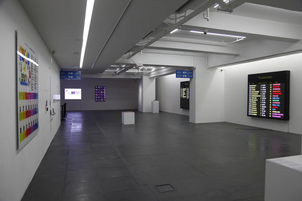
Take Off Project Exhibited @
de Sarthe Gallery Hong Kong
SVA Chelsea Gallery, New York
Blue Star Contemporary, San Antonio, USA