Lov-Lov
Interdisciplinary Project
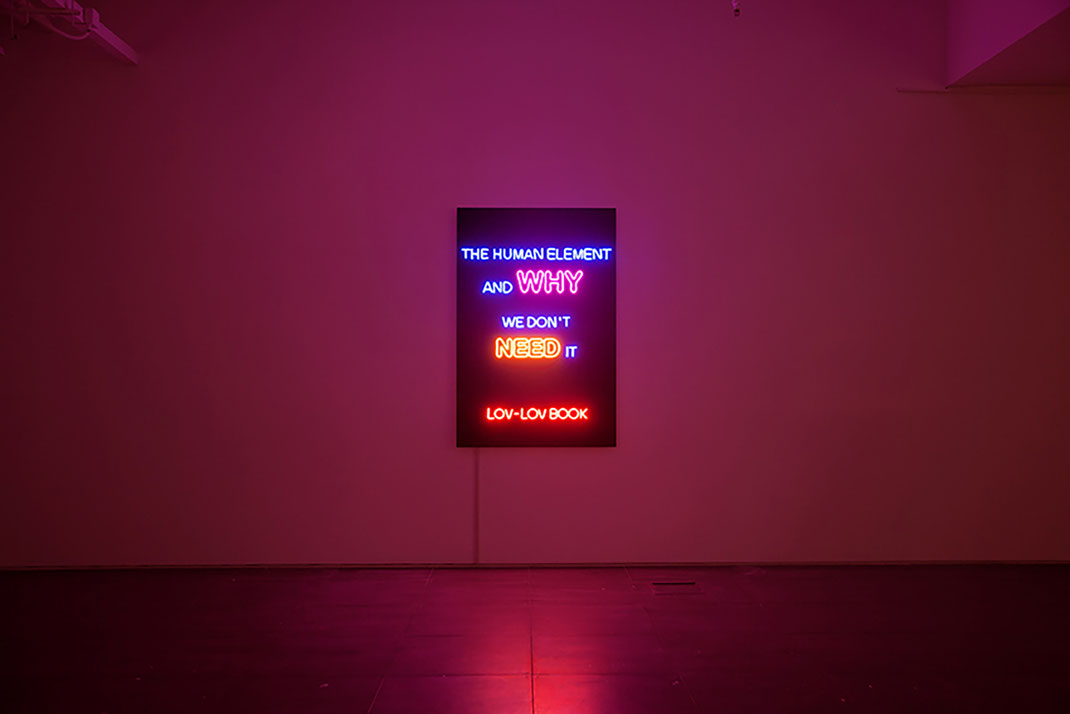
The Human Element and Why We Don't Need It
Neon Light Installation 2019
When Love, Happiness, and Humanity Become Customizable Products
In Lin’s Lov-Lov, artificial intelligence serves merely as a borrowed shell. What the project truly examines is an increasingly profound spiritual dilemma of the technological age: we long to be loved, yet fear the uncertainty inherent in real relationships; we pursue freedom, yet become ever more dependent on systems to make choices on our behalf; we seek happiness, yet attempt to bypass pain, responsibility, waiting, failure, and the independence of others in order to obtain an optimized version of fulfillment.
Lin constructs a fictional corporate entity called Lov-Lov, which offers AI lovers, friends, family members, and even political leaders. Users can download anyone’s appearance, voice, memories, habits, intelligence, sense of humor, and moral values, recombining them into an idealized being designed to meet their personal desires and interact with them in precisely the ways they wish.
It is precisely this “not-so-distant absurdity” that gives Lov-Lov its paradoxical power.
当爱、幸福与人性成为可定制产品
林的《Lov-Lov》中,人工智能是其借来的外壳,真正被讨论的,是人类在技术时代越来越深刻的精神困境:我们渴望被爱,却害怕真实关系中的不确定;我们追求自由,却越来越依赖系统替我们选择;我们渴望幸福,却试图绕过痛苦、责任、等待、失败与他人的独立性,直接获取被优化后的满足。
林虚构了在名为Lov-Lov的商业体,提供人工智能情人、朋友、家庭成员,甚至政治领袖。人们可以根据自己的欲望下载任何人的外貌、声音、记忆、习惯、智慧、幽默感与道德观念,并将其重组为完全符合自身需求并能与之理想互动的对象。
正是这种“不远的荒诞”,构成了《Lov-Lov》矛盾的力量。

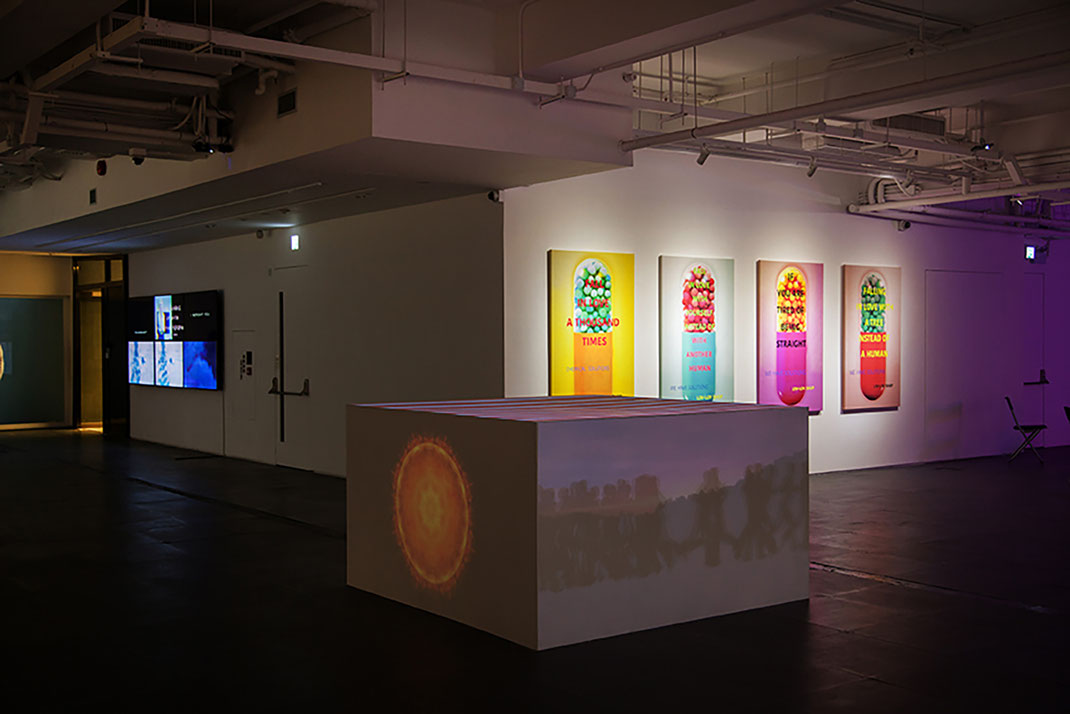
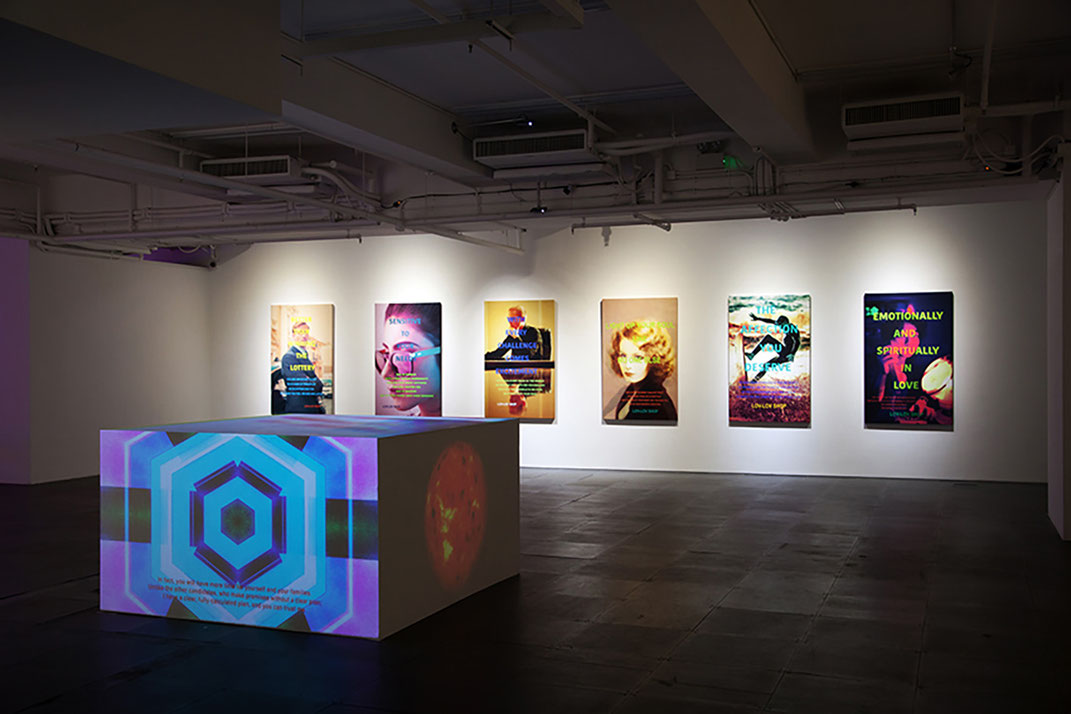
Lov-Lov Shop solo show @De Sarthe Gallery 2019

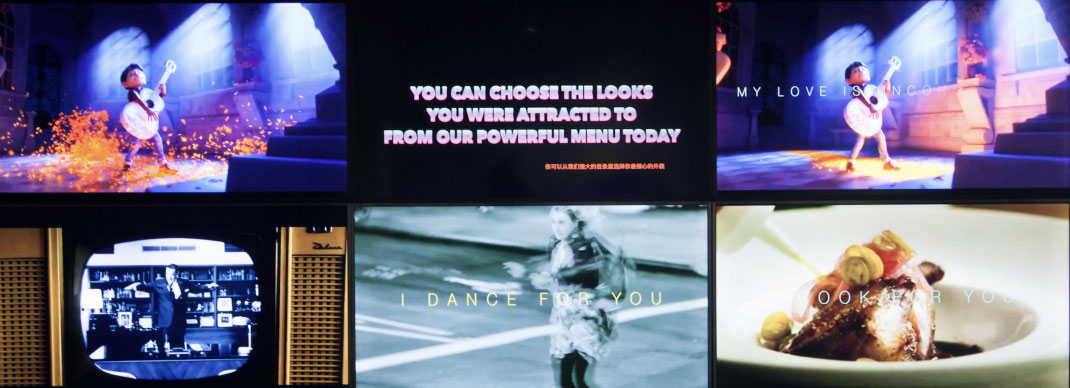
6- channel video
5'30"
Edition 3 +1AP
The Commodification of Love
At its most immediate level, Lov-Lov examines the commercialization of love and intimacy.
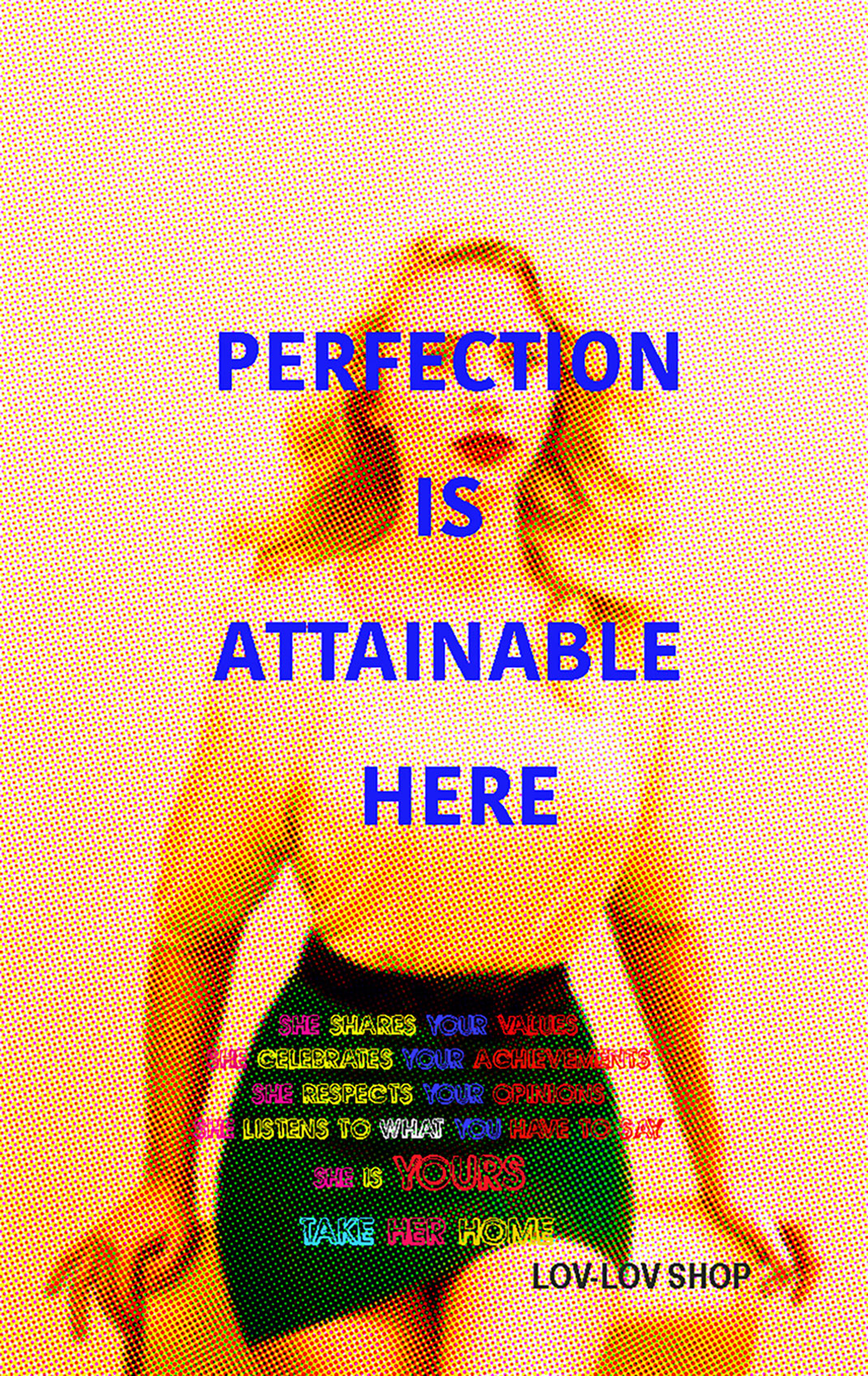
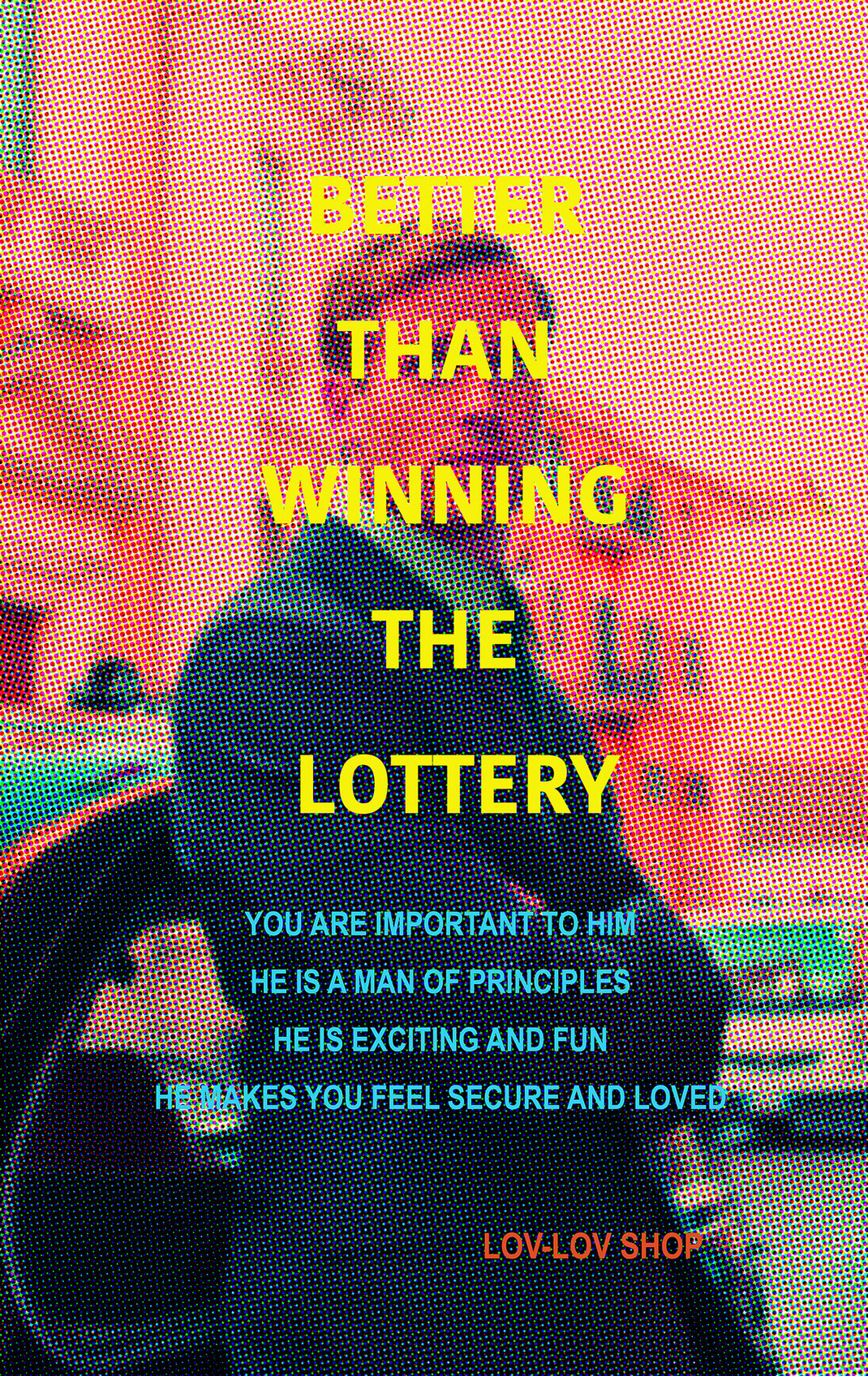
Within the Lov-Lov Shop, ideal partners are displayed, marketed, and sold like consumer products. Advertising language promises “unconditional love,” “companionship on demand,” “sensitive responses to your needs,” and “a perfect relationship that belongs only to you.”
These promises are not unfamiliar. They originate from contemporary consumer culture, the emotional marketplace, social media platforms, dating applications, therapeutic industries, and the culture of self-optimization.
What Lin does is not to invent a future out of thin air, but to push existing desires and social tendencies to their logical extreme.
When love becomes a service, intimacy becomes an experience, and companionship becomes a function, relationships cease to be complex, fragile, and unpredictable encounters between two subjects. Instead, they become products that can be purchased, upgraded, replaced, and canceled.
In this sense, Lov-Lov raises a sharp question:
If we could obtain a companion who always understands us, always supports us, never rejects us, and never leaves us, would we still be willing to engage with real human beings?
Real people, after all, inevitably involve imperfection, misunderstanding, conflict, silence, difference, and the impossibility of complete control.
爱的消费化:对爱情和亲密关系的商业包装
在“Lov-Lov Shop”中,理想伴侣像商品一样被展示、推广和销售。广告语言充满诱惑,承诺“无条件的爱”“随叫随到的陪伴”“敏感地回应你的需求”“只属于你的完美关系”。
这些语言并不陌生。它们来自现实中的消费社会、情感产业、社交媒体、约会软件、心理疗愈市场和自我优化文化。
林所做的,并不是凭空发明一个未来,而是将现实中已经存在的欲望逻辑推向极端。 当爱情被转化为服务,亲密被转化为体验,陪伴被转化为功能,关系就不再是两个主体之间复杂、脆弱、不可预测的相遇,而成为一种可以购买、升级、替换和取消的产品。
在这个意义上,《Lov-Lov》提出了一个尖锐的问题: 如果我们可以获得一个永远理解我们、永远支持我们、永远不会拒绝我们、永远不会离开我们的对象,我们还是否愿意面对真实的人? 而真实的人,恰恰意味着不完美、误解、冲突、沉默、差异与无法被完全控制。

From Being Loved to Controlling Love
The depth of Lov-Lov lies in the fact that it does not simply criticize the human desire to be loved.
There is nothing shameful about wanting love.
There is nothing shameful about wanting to be understood, cared for, or accompanied.
The danger emerges when these desires are increasingly mediated by technology and absorbed by the market. At that moment, the longing to be loved quietly transforms into the longing to control love.
In the world of Lov-Lov, one no longer needs to accept the complexity of another person. Appearance can be selected. Voice can be selected. Personality can be selected. Memories can be selected. Even moral values can be selected.
This means that the “other” within the relationship is effectively eliminated.
The other person is no longer an independent being with desires, positions, histories, and free will of their own. Instead, they become an extension of one’s personal desires.
As a result, the most intimate relationship becomes the most extreme form of narcissistic structure.
What appears to be love is, in reality, a technologically engineered echo.
The echo is gentle, accurate, stable, and perfect.
But it no longer originates from another living being.
从“被爱”到“控制爱”
《Lov-Lov》并不简单批判人类想要被爱的愿望。
想被爱并不可耻。
想被理解、照顾、陪伴,也并不可耻。
真正危险的是,当这种愿望被技术和市场共同接管之后,它会悄悄从“渴望被爱”转变为“渴望控制爱”。
在《Lov-Lov》的世界中,人不再需要接受他人的复杂性。对方的外貌可以选择,声音可以选择,性格可以选择,记忆可以选择,甚至道德观念也可以选择。 这意味着,关系中的“他者”被取消了。
他人不再是一个拥有自身欲望、立场、历史和自由意志的存在,而成为自我欲望的延伸。
于是,最亲密的关系反而变成了最极端的自恋结构。 人看似得到了爱,实际上只是得到了一个经过技术加工的回声。
这个回声温柔、准确、稳定、完美。 但它不再真正来自另一个真实存在的生命。
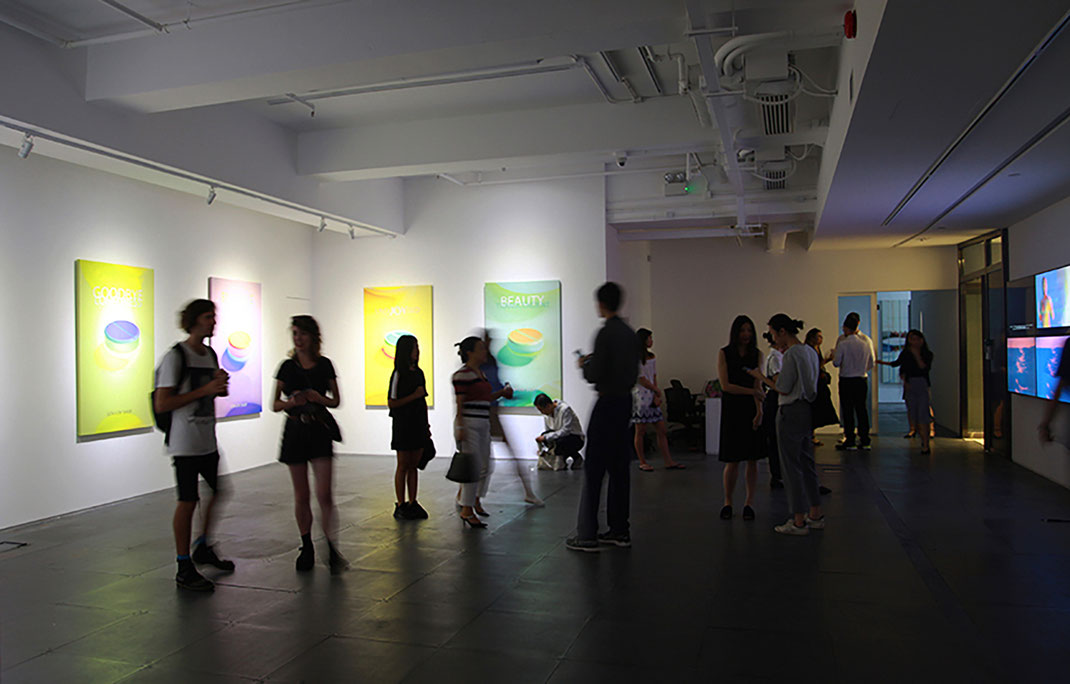
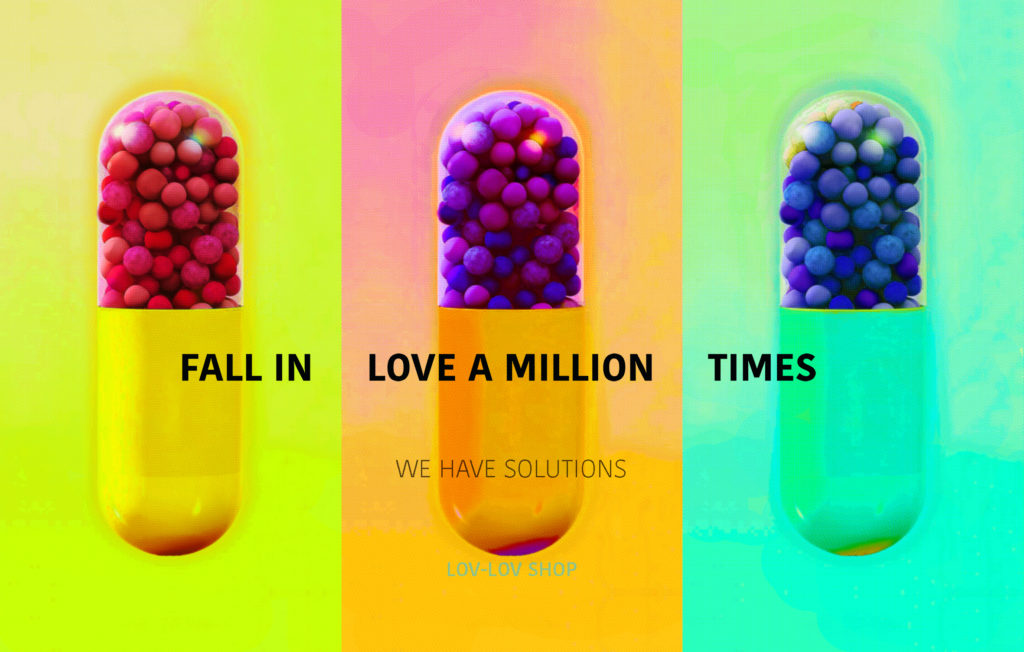
Fall in Love A Million Times
300 x 200 cm 2019
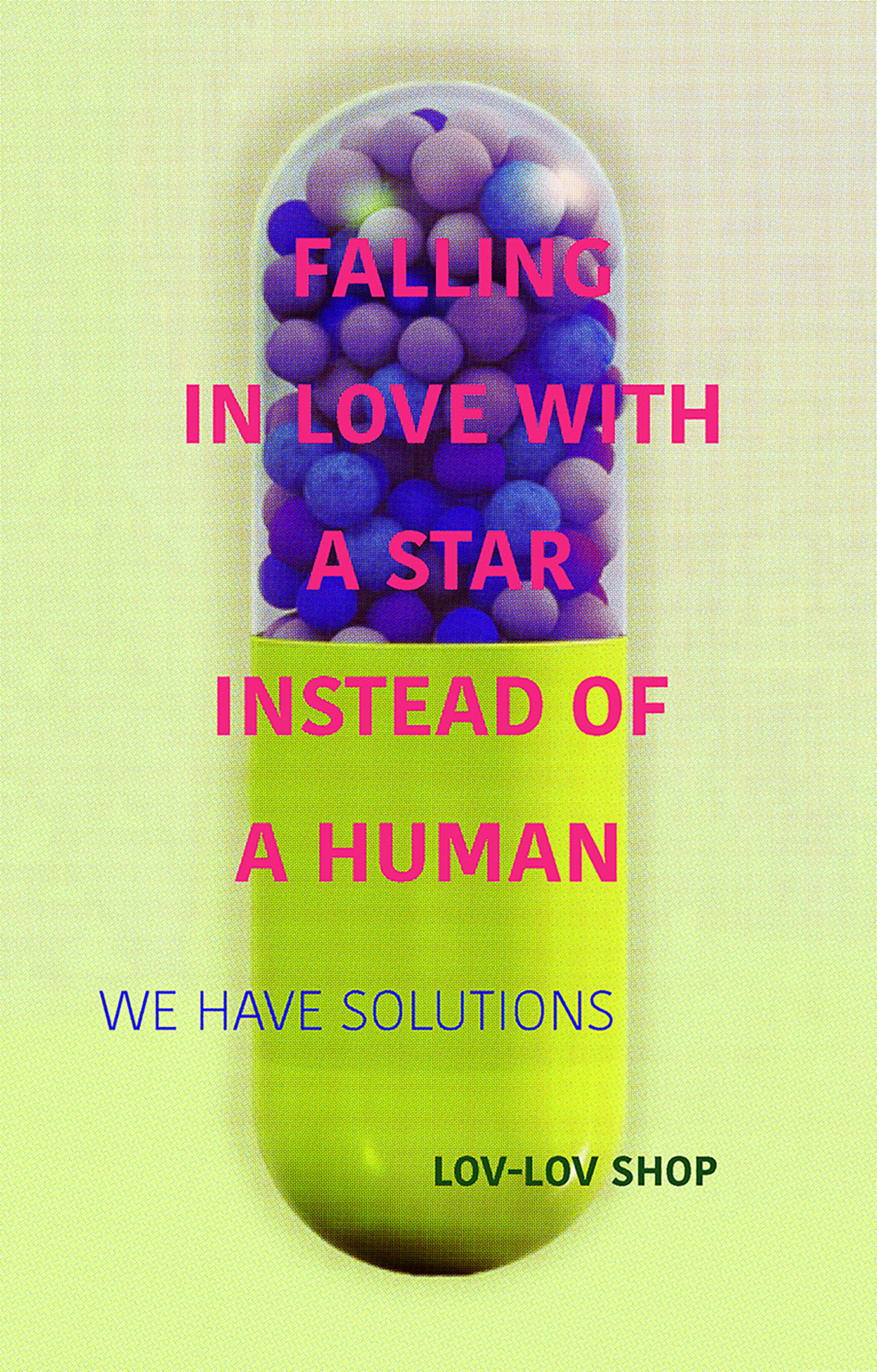
Lov-Lov Pharmacy: The Pharmaceuticalization of Emotion
Lov-Lov Pharmacy constitutes one of the project’s most significant components.
Within this fictional pharmacy, individuals can purchase specialized medications capable of altering emotional reality. These products promise immediate access to love, respect, care, friendship, trust, gratitude, intimacy, and a sense of connectedness.
The work is not merely a satire of pharmaceutical culture. It also addresses a broader psychological condition of contemporary society:
our growing desire to solve complex emotional problems through methods that are fast, effective, and manageable.
Can loneliness be treated?
Can grief be repaired?
Can insecurity be eliminated?
Can intimacy be manufactured?
Can happiness be consumed instantly?
In Lov-Lov Pharmacy, emotions are no longer understood as outcomes of long-term human relationships. Instead, they become chemical effects, commercial services, and forms of social engineering that can be acquired on demand.
In doing so, the project shifts from questions of romance to questions of social structure.
When all pain is treated as a malfunction requiring immediate correction, and every form of discomfort is regarded as an abnormality to be fixed, humanity may gradually lose its capacity to coexist with suffering.
Yet suffering is not merely a negative experience.
It is also a source of understanding, growth, memory, ethics, and compassion.
If human beings preserve only pleasure while eliminating pain; preserve only satisfaction while eliminating frustration; preserve only being loved while eliminating responsibility—can we still be considered whole?
Lov-Lov Pharmacy:情感的药物化
“Lov-Lov Pharmacy”是整个项目中非常关键的一部分。
在这个虚构药房中,人类可以购买各种能够改变现实感受的特殊药物。它们承诺迅速提供爱、尊重、关怀、友谊、信任、感激、亲密与连接感。
这不仅是对药物社会的讽刺,也是在讨论一种更广泛的当代心理机制: 我们越来越希望用快速、有效、可管理的方式解决复杂的精神问题。
孤独能否被治疗?
失落能否被修复?
自卑能否被消除?
亲密感能否被制造?
幸福能否被快速服用?
在《Lov-Lov Pharmacy》中,情感不再是人与人之间漫长关系的结果,而成为一种可以即时获得的化学效果、商业服务和社会工程。 这使作品从爱情问题进入社会结构问题。 因为当所有痛苦都被视为需要立刻消除的故障,当所有不适都被视为需要被修正的异常,人类也许会逐渐失去与痛苦共处的能力。
但痛苦并不只是负面经验。 痛苦也是理解、成长、记忆、伦理与同情心的重要来源。
如果人类只保留快乐,而删除痛苦;只保留满足,而删除挫折;只保留被爱,而删除责任,那么人是否仍然完整?




The AI President: The Perfect Political Substitute
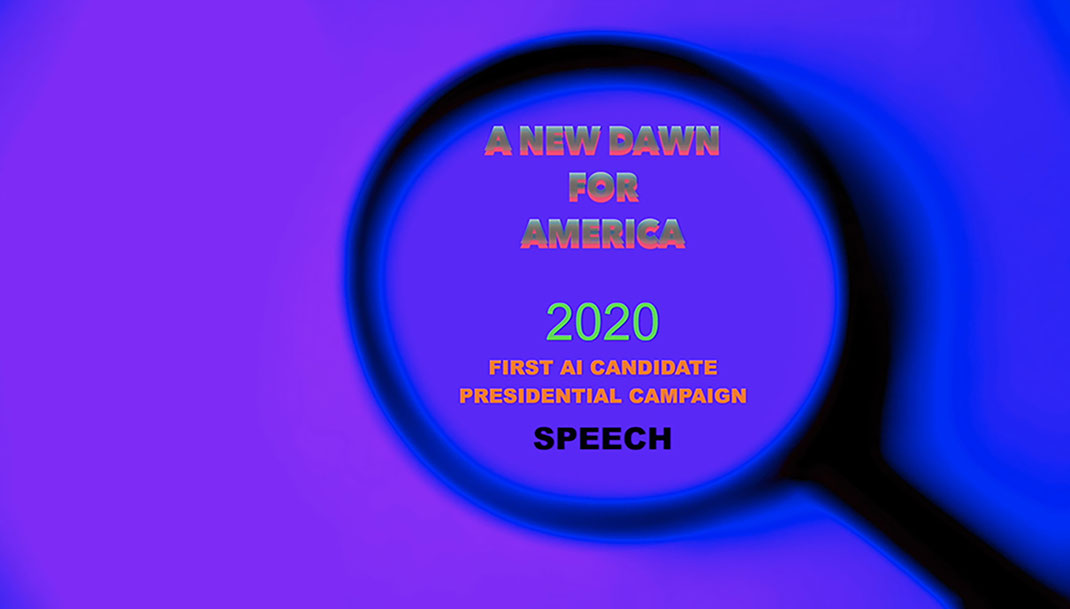
Second to None — You Can Trust Me extends the questions raised by Lov-Lov from the realm of personal relationships into that of public politics.
Here, Lin proposes an absurd yet penetrating proposition: if artificial intelligence were more rational, more stable, less scandal-prone, and less driven by self-interest than human beings, should we elect an AI president?
The strength of this proposition lies in the fact that it is not pure fantasy.
Political fatigue, disappointment, scandal, manipulation, populism, misinformation, and declining public trust have led many people to long for a cleaner, more efficient, and more reliable form of governance.
The AI president appears to offer a solution to political crisis.
Yet it simultaneously introduces a more troubling question:
If we become willing to replace human beings with machines simply because we are exhausted by human flaws, are we reforming politics—or abandoning it?
Politics has never been a purely rational calculation.
It consists of conflict, negotiation, responsibility, value judgments, historical memory, and public ethics.
If politics is transformed into an optimization program, citizens themselves may be reduced to data inputs.
At that point, efficiency may replace justice.
Stability may replace freedom.
Reliability may replace human judgment.
In this sense, Lov-Lov asks not only whether artificial intelligence can become humanity’s companion, but also whether it may become humanity’s ultimate excuse for avoiding responsibility.
AI 总统:政治中的完美替代物
《Second to None — You Can Trust Me》将《Lov-Lov》的问题从私人关系推进到公共政治。
在这个项目中,林提出一个荒诞却尖锐的设想:如果人工智能比人类更理性、更稳定、更少丑闻、更少私欲,那么我们是否应该选择一个 AI 总统?
这个设想之所以有力,是因为它并不是单纯的幻想。
现实政治中的疲惫、失望、丑闻、操控、民粹、谎言与失信,已经使人们越来越渴望一种更干净、更高效、更可靠的治理形式。
AI 总统看似是对政治危机的解决方案。 但它同时提出一个更加危险的问题: 如果我们因为厌倦人类的缺陷,而愿意用机器替代人类,那么我们究竟是在改造政治,还是在放弃政治?
政治本来不是纯粹理性计算。 政治包含冲突、协商、责任、价值判断、历史记忆和公共伦理。
如果政治被转化为最优化程序,公民也可能被转化为数据输入。 这时,效率可能取代正义。 稳定可能取代自由。
可靠可能取代人的判断。 《Lov-Lov》因此不仅讨论人工智能是否能成为人类伴侣,也讨论人工智能是否会成为人类逃避自身责任的终极借口。


Loneliness in the Posthuman Age
On the surface, Lov-Lov is filled with humor, advertising aesthetics, and the language of popular culture.
Its underlying tone, however, is loneliness.
Not the traditional loneliness of physical isolation, but a structural loneliness characteristic of the posthuman condition.
We live in an era of increasing choices, increasing connectivity, increasing services, increasing entertainment, and increasing opportunities for self-expression.
Yet at the same time, we are becoming less capable of tolerating the uncontrollability of real relationships.
We want to be seen, yet fear being misunderstood.
We want to be accepted, yet fear being judged.
We want intimacy, yet resist the risks that intimacy requires.
We want community, yet reject the limitations that community imposes upon individual desire.
Technology appears to offer a perfect solution:
the elimination of the need for real others.
This is perhaps the most unsettling aspect of Lov-Lov.
The project suggests that humanity’s deepest desire may not be love itself, but liberation from other people.
Liberation from their vulnerability.
Liberation from their demands.
Liberation from their rejection.
Liberation from their independence.
Liberation from their existence as genuinely autonomous others.
后人类时代的孤独
《Lov-Lov》表面上充满幽默、广告感和流行文化语言,但它真正的底色是孤独。 这种孤独不是传统意义上的一个人独处,而是一种后人类时代的结构性孤独。
在这个时代,人似乎拥有更多选择、更多连接、更多服务、更多娱乐、更多自我表达工具。 但与此同时,人也越来越难以忍受真实关系中的不可控性。
我们希望被看见,却害怕被误解。
我们希望被接纳,却害怕被评判。
我们希望拥有亲密关系,却不愿承担亲密关系中的风险。
我们希望获得共同体,却不愿接受共同体对个人欲望的限制。
于是,技术提供了一个看似完美的解决方案: 不再需要真正的他人。 这正是《Lov-Lov》最残酷的地方。 它让人看到,人类最深的欲望也许不是爱,而是摆脱他人。 摆脱他人的脆弱。 摆脱他人的要求。 摆脱他人的拒绝。 摆脱他人的独立性。 摆脱他人作为他人的存在。


Today, our emotional makeup and our tapestry of needs are different from those of past generations. In fact, love is becoming increasingly selfish. Vanity and the pursuit of unrealistic shallowness have already brought pain to many of us. Modern individuals are seeking shortcuts from various aspects of life, leading to a disarray that results in anxiety, unease, aversion to rejection, and fear of judgment. This has prompted many to gravitate towards new ideal relationships and lifestyles that involve non-human service providers.
今天,我们的情感构成和需求格局与以往时代的人们不同。事实上,爱情变得越来越自私。虚荣和对不切实际的肤浅的追求已经给我们许多人带来了痛苦,现代人正在从生活的各个层面寻找捷径,这种失调导致焦虑、不安、厌恶被拒绝、被评判,让许多人更加倾情于非人类提供服务的新型理想关系和生活。


如果人工智能的外观与人类无异,并将根据客户的确切需求而制造,人们可以从一个巨大的数据库中,选择任何人作为模型,并自由下载该个体的性格、外貌、声音、习惯、记忆、思维能力和道德观念。其必将惊人的准确度和精准性,就如同我们不断提高的相机像素一样,必然前所未有地得到发展和实施,人类将可以通过简单的金融交易购买了最难以捉摸的人类自由:摆脱其他人,他们的弱点、偏好和任何不妥协的独立性。人类将被赋予了对他们个人经历、现实和社区的绝对独裁权。这种让人摆脱不安全感的威胁,完全掌控自己的生活和人际关系的新力量,最大程度地开发着幸福。社会关系成为下载、复制、重写,优化,一旦定制的、技术驱动的关系在社会上被广泛接受,它们不仅会彻底消除人们对其他人类和人际关系的依赖,而且会颠覆我们对身份、情感、社区和道德的定义,对“获取”欲望的持续扩张,对“付出”的兴趣日益减少,最终将成为每个人的现实。

If artificial intelligence were indistinguishable from humans in appearance and manufactured according to exact customer specifications, people could choose any individual from a vast database as a model and freely download that individual's personality, appearance, voice, habits, memories, thinking abilities, and moral beliefs. This would inevitably see unprecedented development and implementation with astonishing accuracy and precision, much like the ever-improving pixel count in cameras. Humans would gain access, through simple financial transactions, to the most elusive human freedom: liberation from others, their weaknesses, preferences, and any uncompromising independence.
People would be endowed with absolute autocracy over their personal experiences, realities, and communities. This new power to rid oneself of insecurity and fully control one's life and relationships maximizes happiness. Social relationships become downloadable, replicable, rewritable, and optimized. Once custom, technology-driven relationships are widely accepted in society, they not only completely eliminate people's dependence on other humans and interpersonal relationships but also overturn our definitions of identity, emotions, community, and morality.
The relentless expansion of the desire to "acquire" and the diminishing interest in "giving" would ultimately become everyone's reality.

"Unconditional Love and Companionship on Call" (2019) showcases a society entirely constructed by artificial intelligence, customized based on user data. In this new society, humans are no longer burdened by interpersonal relationships, as the desires for social harmony, intimacy, and belonging have been comprehensively addressed. Technology incorporates these needs into a closed and manageable system, eliminating any possibility of unwanted conflicts. "In a world so perfect, would humans be willing to terminate their relationships with other humans (and even all other natural life) and live happily ever after in an artificial simulation?"
《无条件的爱与随叫随到的伴侣》(2019)展示了一个完全由人工智能构建的社会,该社会根据用户需求数据进行定制。在这个新社会中,人类不再被人际关系所拖累,因为社会和谐、亲密关系和归属感的渴望都已经被全盘考虑。技术将这些需求纳入一个封闭且可管理的系统中,消除了不受欢迎的冲突发生的任何可能性。“在一个如此完美的世界里,人类会愿意终止与其他人类(甚至所有其他自然生命)的关系,并在人造模拟中过上幸福的生活吗?”


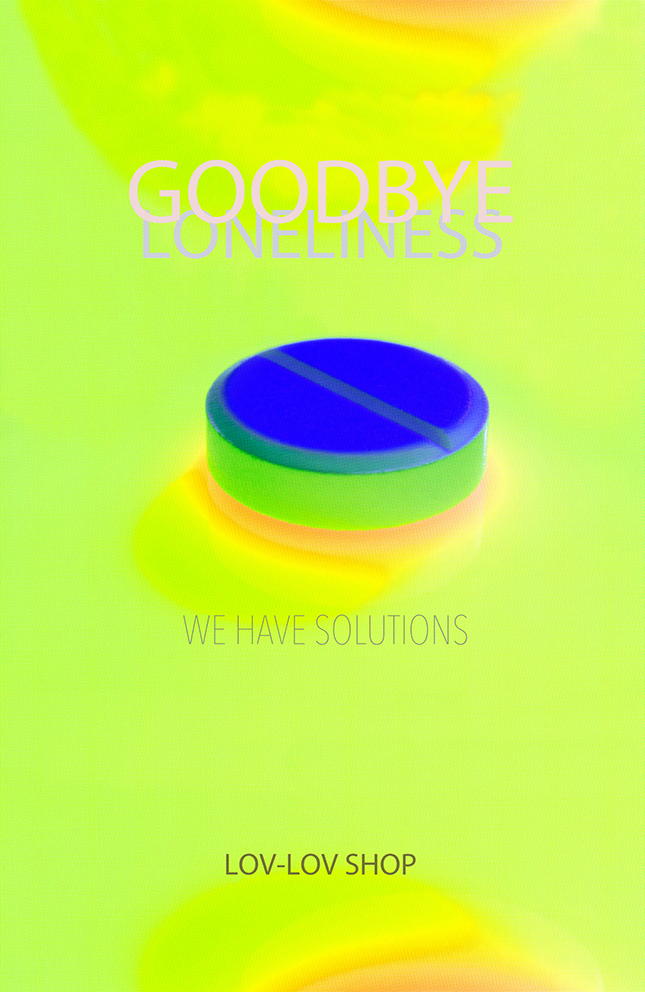
Special mind-altering medication.
A pharmacy that showcases the greatest satisfaction possible, allowing humans to alter their sense of reality; in a sense, an individualized shortcut to wide-scale social engineering which will help humans quickly purchase feelings they have deeply longed for but have trouble retaining such as love, respect, care, friendship, trust, gratitude, intimacy, and sense of connectedness.
特殊的意识改变药物。
一家展示着最大满足度的药房,让人类可以改变他们对现实的感知;从某种意义上说,这是一种个性化的快捷方式,可以进行大规模的社会工程,帮助人类迅速购买他们深切渴望但难以保持的感受,如爱、尊重、关怀、友谊、信任、感激、亲密和归属感。


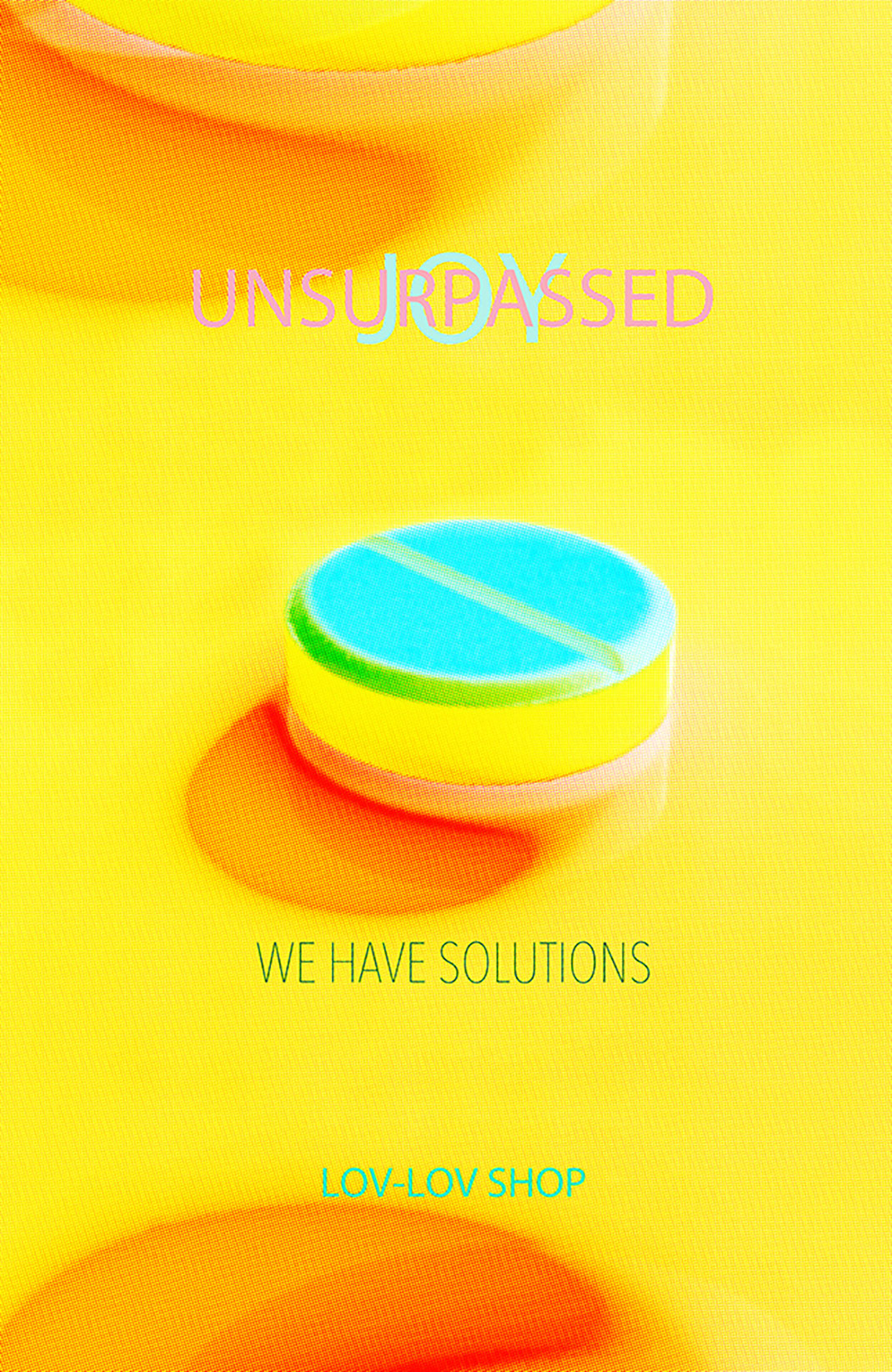
We Have Solutions (2019)


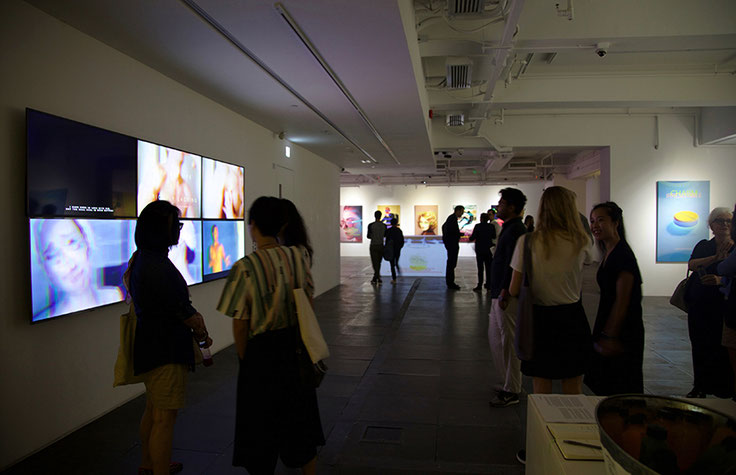


Using paradoxical concepts and humorous language, Lov-Lov comments on the direction of our political, cultural, and social development, discusses the influence of reality on how we perceive general humanity and the unease we share as a collective. The artist hopes that the pressure of living in the technological era will urge us to reconsider what it means to be human.
Lov-Lov以悖论性概念和幽默语言评论了政治、文化和社会,探讨了现实对我们如何看待普遍人性以及我们作为集体分享的不安的影响。
(A book written by an AI author)
The Human Element And Why We Don’t Need It.
Second To None- You can Trust Me (2019) is the slogan for Lin’s 2020 Presidential Election project, in which she encourages voters to opt for a socially responsible AI president.
Lin’s cubic projection installation A New Dawn For America (2019) introduces, for the first time in history, an AI presidential candidate. Cast through five projections atop a single white cube, the video delivers a passionate and detailed speech given by the AI candidate. The candidate tackles the most sensitive and complex of social issues and demonstrates its ability as a future leader with daring vision. While AI surpasses humans in logical reasoning, information processing, and making intelligent decisions, it is also untethered from biological and personality flaws, and incapable of personal scandals and political tyranny. It is the most reliable and trustworthy candidate in terms of fulfilling public service and civil obligations, and it satisfies the selection criteria of most voters.
A New Dawn for America Video 2019
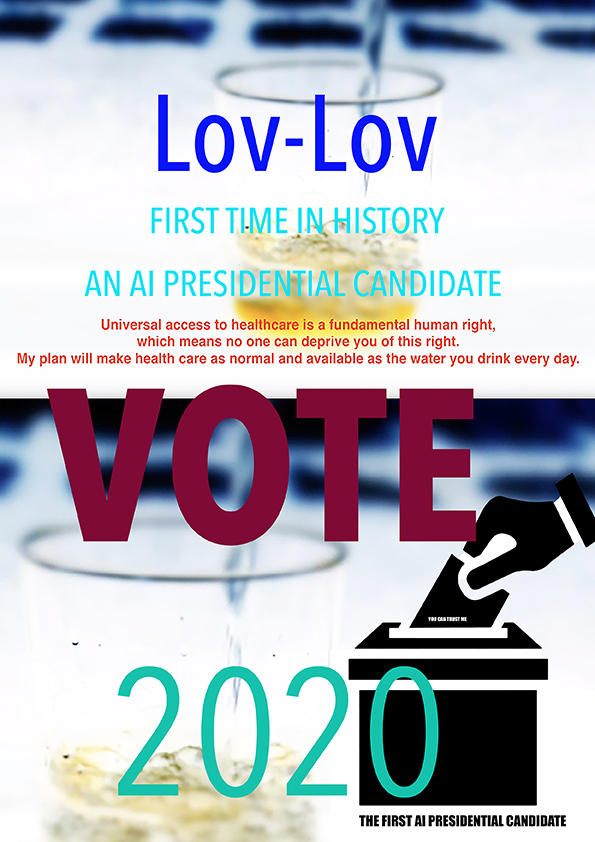
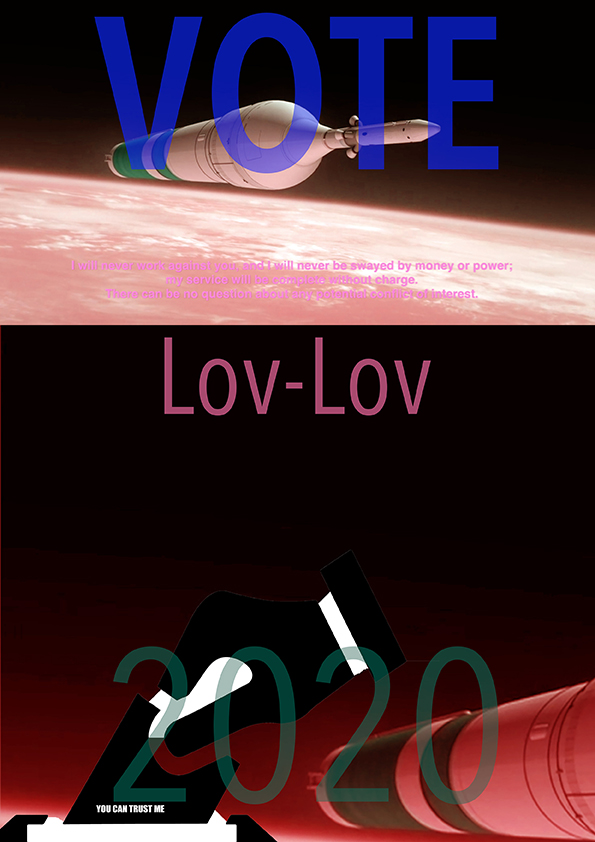
Installation for 2020 Presidential election campaign for the first AI presidential candidate
Title: You Can Trust Me
Starting from promoting a 2020 AI Presidential election campaign, the whole idea is first to create a socially responsible AI that can replace any human leader in the political sphere, then to eventually replace all representatives, institutions and soft infrastructure of government with robots.
Can humans coexist indeed peacefully with the hyper-intelligent machines they create?
Can machines be more rational or reliable than humans?
Rather than enduring the endless political scandals of each election cycle, the voting public can select an ethically and morally consistent robot that will be reliable and trustworthy in discharging its civic duties and executing the will of the voting public.
Can AI evolve into higher quality species than humans?
This absurd 2020 election campaign also probes our insecurities and exhaustion from the social obligations, using the proposal of complete displacement of the individual human for a simulacrum as a means to question how our current political reality is impacting our sense of what human collectivity is.
About Lov-Lov: Lov-Lov is a fabricated future company.
Lov-Lov aims to “allow anyone to escape the threat of insecurities and take full control over their lives…” With this newfound power, human will be able to constantly adjust and reset their rights and needs thus “maximizing their satisfaction”.
Social needs and group dynamics will no longer based on the requirements of a cooperative society, but on the individual’s selfish desires and goals.
In Lov-Lov’s world, people live trouble free and fully-pleased in their relationships as they socialize with intelligent, perceptive, cogent robots that satisfy all their needs for affiliation, intimacy and social integration.
Lov-Lov perfect society will allow anyone to escape the threat of insecurities and take full control over their own lives and interpersonal relationships. With this newfound power, human beings will be able to constantly adjust and reset their rights and needs in their social groups, thus maximizing their happiness.
70-Minutes Documentary Film
(Estimated completion time of the film: Dec. 2023)
Lov-Lov (film) is an absurdist, narrative, 70 minutes documentary film as the newest exploration of the Lov-Lov interdisciplinary project.
Lov-Lov is a fabricated company of custom-designed AI partners, friends, family members, even President. Customers can download the appearance, voice, memories, habits, intelligence, and moral perspective of any person of any time from human history. Lov-Lov aims to “allow anyone to escape the threat of insecurities and take full control over their lives…” With this newfound power, human will be able to constantly adjust and reset their rights and needs thus “maximizing their satisfaction”.
Lov Lov (film) blurs how reality is perceived and idealized. Presented as alternating vignettes, the film moves between documented conversations with Lin and fellow artificial biologists, virtual reality researchers, art historians, artists, and writers around the subject matter, conceptual auteur, and interpretations of the socio-cultural implications.
This presentation considers many facets of the issue at hand:
If our desires can be met without limit by technology;
If we can have instant love, respect and across the board dedication;
If we don't have to care about the existence of others;
If we can successfully allude setbacks and difficulties;
Will we become unreachable, unable to think, and unable to communicate?
Will the definition of freedom and honesty be subverted?
Will we be trapped in a post-human wilderness, becoming a cruel and ridiculous species?
Are we misunderstand the meaning of life?
What would it mean to be human?
Deeper analysis of these questions drive the narrative framework of the film. It poses questions about what we value, need, and desire. It reflects how human nature is shifting and traditional moral concepts are subverted and gradually rewritten.
To date, the presentation of the Lov Lov Project has taken form as multi-screen videos, a pseudo-marketing campaign of prints, neon installations, comments on the direction of our political, cultural, and social development. The film is devised to continue examining what the project has already begun to question, and how evoking this through the medium of film can present an alternative variation on the existing conversation, audience members will identify with individual values presented through the dialogues and be confronted with their own determinations about how possible this remains for the rest of humanity.
Using paradoxical concepts, the act of building the storyline and production for this film is also an act of research and questioning that continues to shape the Lov Lov project as a broadly missioned body of conceptual work. It becomes both the process and the product to continue exploring the influence of reality on how we perceive general humanity and the unease we share as a collective.
Lov-Lov Project Exhibited @
Blue Star Contemporary 202-2021
Institute of Contemporary Art San Jose 2020-2021
de Sarthe Gallery Hong Kong 2019
SVA Gallery, New York 2019
Taipei Dangdai, Taipei 2019
Art Basel Hong Kong 2019
“Light Year 55"- Video Art Exhibit projected onto the Manhattan Bridge,New York 2019