
In 2002, Lin Jingjing began My 365 Days, a year-long performance project. Throughout the year, she collected the strands of hair that naturally fell from her body each day and documented the process through photography and video.
Through an almost ritualistic act of repetition, the work transforms an ongoing bodily loss—one that usually goes unnoticed—into something visible. Yet the very act of preservation simultaneously confirms the occurrence of loss and its irreversibility.
The work does not attempt to resist the passage of time or the inevitability of disappearance. Instead, it makes loss itself the object of attention. Nor does it offer a means of overcoming vulnerability; rather, it creates the possibility for vulnerability to be perceived, acknowledged, and understood.
This coexistence of seemingly contradictory conditions marks one of the earliest manifestations of the paradoxical thinking that would later become central to Lin's practice. As the earliest work included in this retrospective, My 365 Days introduces an observation that has continued to resonate throughout her work: although human beings know they cannot prevent loss, they persist in recording, preserving, and commemorating. Yet it is precisely through these attempts to hold on to things that loss itself becomes most visible.
2002 年,林菁菁开始持续一年的行为项目《我的 365 天》。在这一年里,她收集自己每天自然掉落的头发,并以影像记录这一过程。
作品以一种近乎仪式性的重复行为,将身体持续发生却往往不被察觉的的流失转化为可见的存在,而这种努力本身恰恰确认了消失的发生和不可逆转。
作品并不试图抵抗流逝,而是使流逝本身成为观看的对象;作品更不提供克服脆弱的方法,而是让脆弱获得被感知和被理解的可能。
这种彼此矛盾却共存的隐喻,构成了林的创作中最早出现的悖论观念,作为本次回顾展最早期的作品,《我的365天》首次呈现了此后贯穿林菁菁创作的重要观察:人类明知无法阻止流失,却仍不断记录、保存与纪念;而正是这些试图留住事物的行为,使流失本身变得更加清晰可见。

My 365 Days (Detail) 472.5 x 98.5 inches (1200 x 250 cm) 2003


Lin Jingjing’s work perhaps alludes to art emerging in a different form. In terms of symbolic documentation, it has the power to restore certain things which have been lost, and in a certain way, to make them eternal.
Often an artist’s activities in conceiving and completing an artwork are aimed at neutralizing the destructive force of death, including every form of death, from the “microscopic” to the “massive”, from the most symbolic to the most real.
The power of art can truly turn death into an opportunity for rebirth. Perhaps there still remains a bit of anxiety. Collecting and recording a part of the body as an act of preservation has an almost eccentric, ritual order to it. No matter how complete and beautiful it appears, there is still the pressure of loss and fear.
The death of others and the disappearance of material things hit us so hard because they represent our own death. Losing loved ones and things forever is no different than a part of ourselves dying.
In this light, the funerals held for others are nothing more than a disguised form of mourning for the self.
It seems as if Lin Jingjing hopes to use her works to remove the veil that prevents us from seeing and recognizing this mechanism, bringing us directly into individual existence and the source of pain.
by Maurizio Giuffredi
林菁菁的作品: 我的365天,也许暗示艺术以其它形式出现和在象征记录上,使某些失去的东西复活的能力,以某种方式使它们永恒。
通常一个艺术家在构思和完成作品时的活动,几乎总是以抵消死亡的毁灭力为目的,包括任何种类死亡,从最'微小的'到最'巨大的',从最象征性的到最实在的死亡。
艺术的力量确实可以使死亡成为再生的机会,也许还带着一丝忧伤和隐约不踏实的感觉,收集保存记录自己身体的一小部分的补救行为有着近乎神经质的仪式般的规律性,虽然尽善尽美,但表现的仍然是失落的恐惧和压力。
他人的死亡和物品的消失对我们的打击之所以如此巨大,是因为也代表着我们自己的死亡,不复存在的亲人和物品无异于我们自身的一部分已经死亡。因此为他人举办的丧礼,只不过是为自己致哀的一种伪装而已。
似乎林菁菁想以其作品扯去那层阻止我们看见和认清这个机制的面纱,直接引入个体的存在和伤痛之处。
--毛栗子.朱弗洛伊德
Rose Rose
Rose, Rose
2008–2011
Photography, Performance, Video, Installation
Rose, Rose is one of Lin Jingjing's most significant long-term bodies of work, developed over more than a decade. Through the simple yet unsettling act of sewing together rose petals, Lin places repair and injury, preservation and deterioration, hope and failure within the same process.
The thread reconnects what has been torn apart, yet in doing so creates new wounds. The gesture seeks to prolong life, while simultaneously reminding us of its inevitable disappearance. The paradox embedded in the work is not merely symbolic; it emerges from an observation of reality itself. Many of the things we attempt to preserve are transformed precisely through the act of preservation.
While Rose, Rose extends the concerns with vulnerability, loss, and traces of existence first explored in My 365 Days, the artist's perspective begins to move beyond personal experience toward broader questions of human existence.
In an era increasingly devoted to healing, restoration, and optimization, Rose, Rose reveals a condition that is both widespread and often overlooked: many things are not altered by loss alone, but by the very efforts made to sustain them. The work marks an important shift in Lin's practice—from an exploration of individual vulnerability toward an ongoing inquiry into the conditions of human existence.
《玫瑰玫瑰》2008-2011,摄影/行为/录像/装置
《玫瑰玫瑰》是林菁菁持续十余年的重要创作系列之一。林通过缝合玫瑰花瓣这一简单而反常的动作,将修复与伤害、维系与损耗、希望与失败同时置于同一过程之中。
缝线连接断裂,却也制造新的创口;试图延续生命,却不断提醒生命终将消逝。作品中的悖论并非象征性的修辞,而是关于现实本身的观察:许多我们试图维护的事物,往往正是在维护过程中发生改变。
《玫瑰玫瑰》延续了《我的365天》中对于脆弱、失去与存在痕迹的关注,但艺术家的视角已不再停留于个体经验本身,而开始转向更广泛的存在处境。
在今天这个不断追求疗愈、修复与优化的时代,《玫瑰玫瑰》揭示了一种广泛存在却常被忽略的现实:许多事物并非毁于失去,而是在被努力维系的过程中发生改变。《玫瑰玫瑰》标志着其艺术实践从对于个体脆弱性的观察,逐渐转向对于人类存在条件的持续追问。
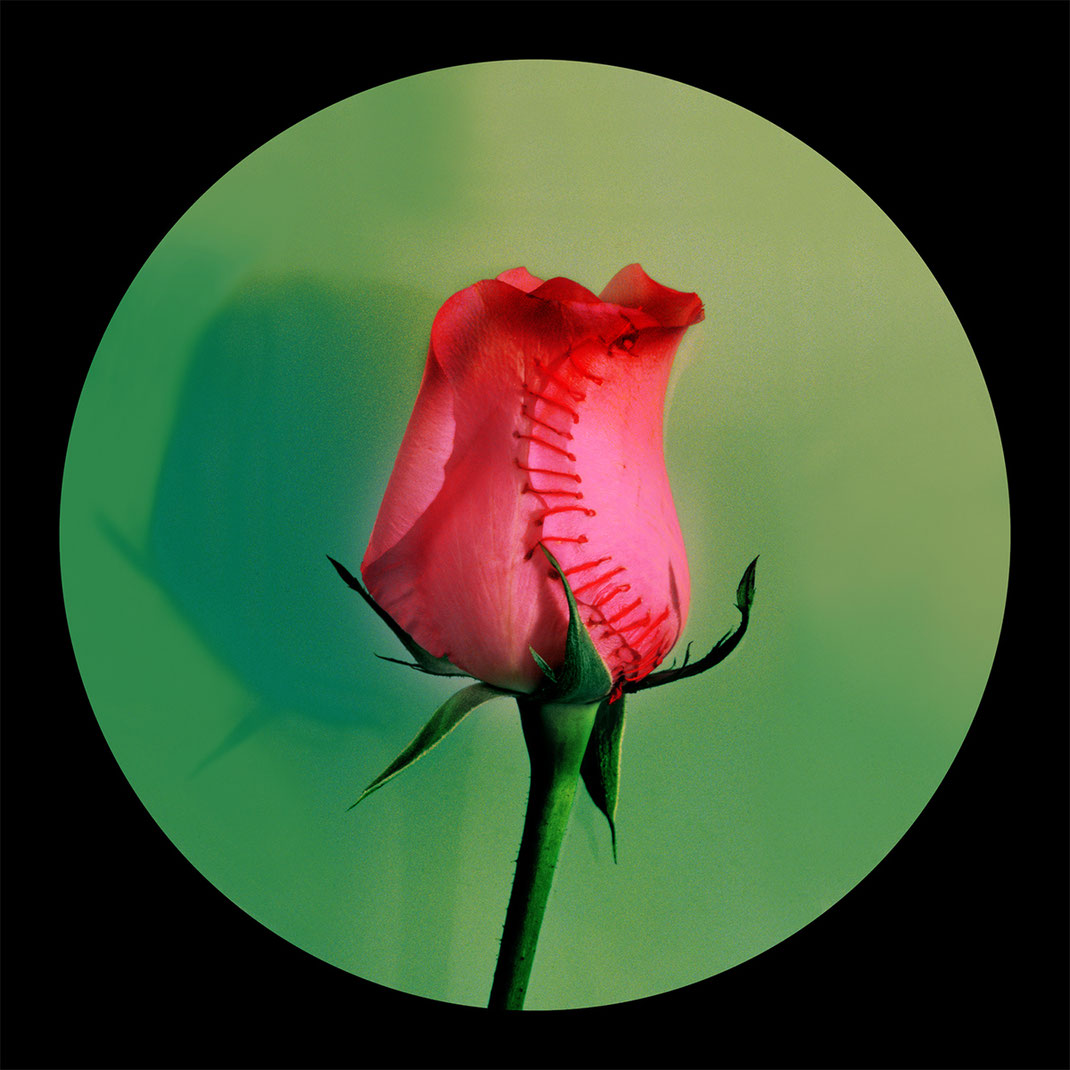
Rose Rose Photography 140x140cm 2008
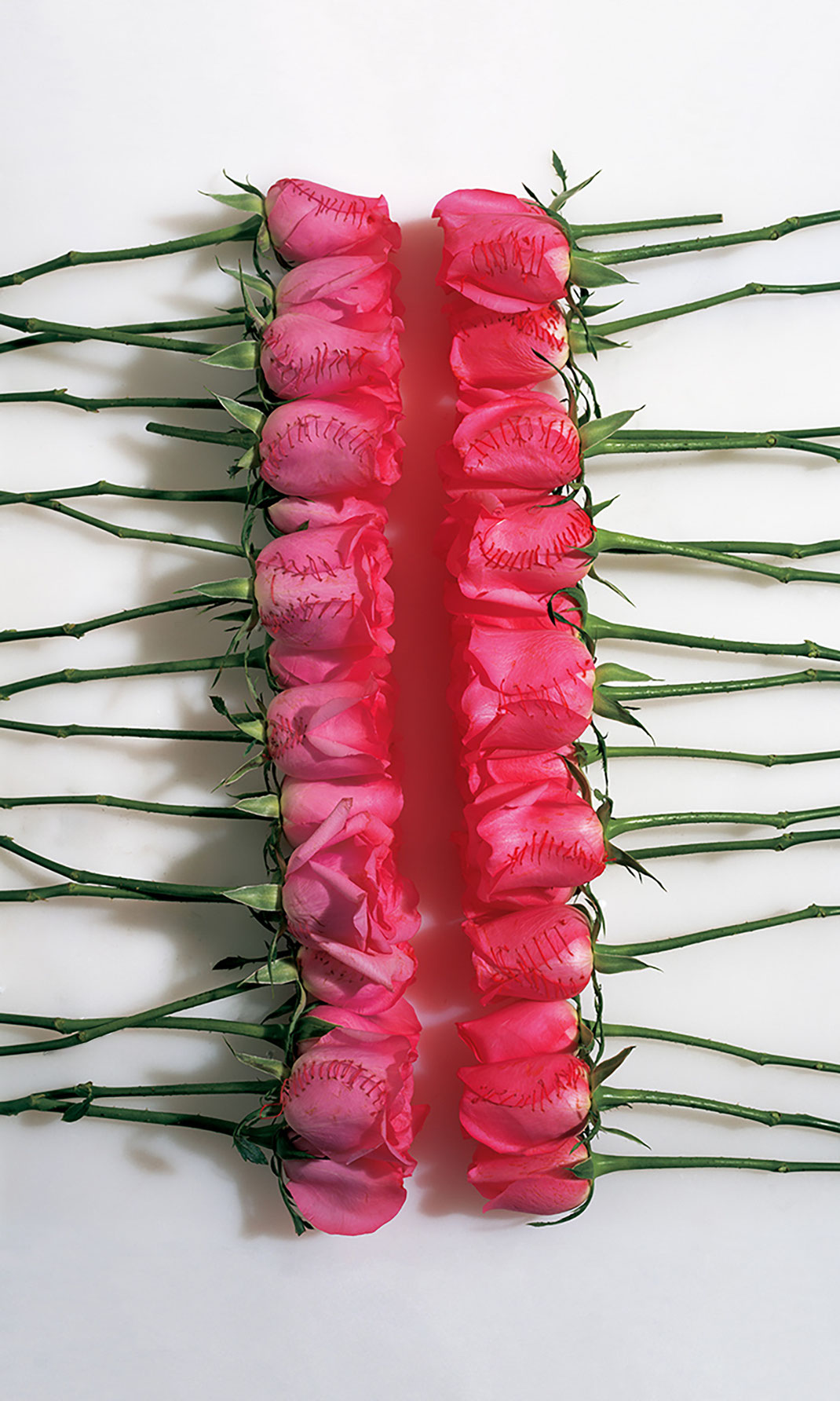
Rose Rose Photography 200x120cm 2009


Rose Rose(No.15-17) Photography 200x120cm 2009
“Things” have memory. Its murky air can represent very personal memories, or the cultural memories of a generation. It can bring a sense of belonging to every ordinary moment, or it can bring about inexplicable terror. For a brilliant, radiant life, it is more like a cruel joke.
One must know that life is very fragile, very easily damaged. Violence, imprisonment, even persistence can turn into the most dangerous and unseen form of injury.
Though roses have sharp thorns, they are fragile. They are innocent and helpless. They look uneasily towards the uncertain future. They are wholly unprepared to be harmed, and they cannot take it.
Hope and hopelessness, love and pain, life and death, struggle and surrender, nurturing and destruction…only a fine line stands between them.
--Lin jing jing Notes " Dress "


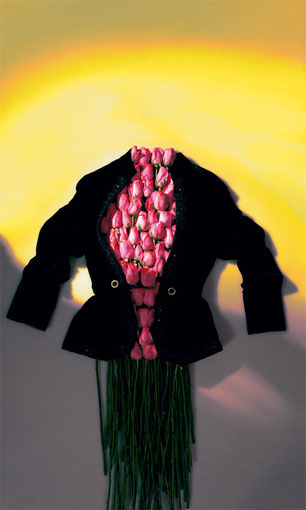
Rose Rose (No.18-20) Photography 200x120cm 2009

It was not Silence but Emotional Coldness Photography 481 x 50 cm 2018